The tech startup environment has shifted, and what used to work for entrepreneurs no longer applies. But why?
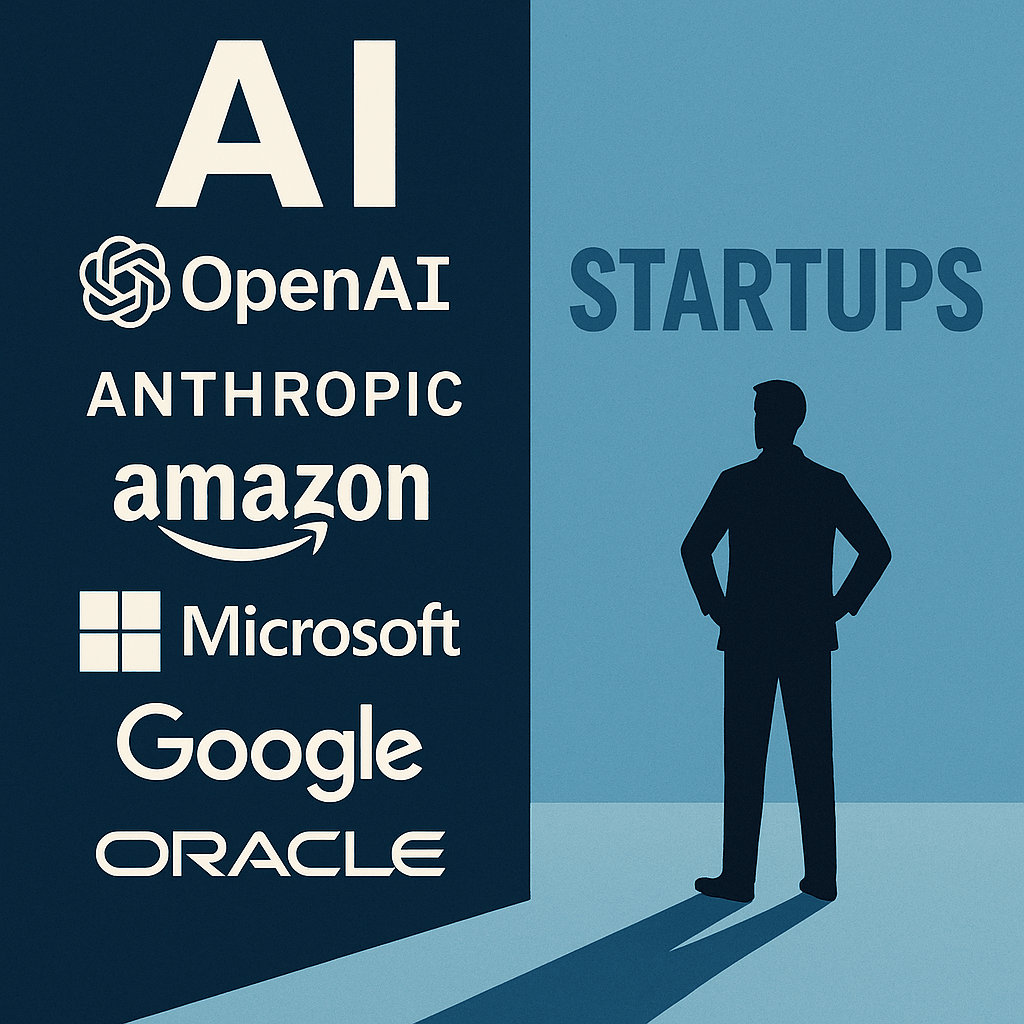
1. AI Is a Game for Giants – Not Small Players
As someone inside these giants, I’ve seen every AI-related startup idea in the past few years get included into the roadmaps of big tech companies.
It’s no longer just about building great models but it’s about compute, cloud, and control. Even if you build a perfect model, you still can’t serve it.
Building large language models (LLMs) is no longer a startup-friendly game. It’s a trillion-dollar infrastructure race.
2. The Traditional Startup model Doesn’t Work in AI
Good example is OpenAI. Originally founded as a non-profit to enable long-term research with no tax, later transitioned to a “capped-profit” model to attract billions in funding. But for years, there was no product launch, no public beta, and no customer feedback loop.
This is against all startups advices you might get including Sam Altman’s old Y Combinator advice: “Launch fast. Ship an MVP. Talk to users. Iterate.”
Sam in his OpenAI did the opposite:
No MVP No early customers No revenue model for years, quiet development in stealth mode.
Who else can raise billions in the same model? In 2025, only Safe Superintelligence Inc (SSI) founded by Ilya Sutskever can do that. He was the genius behind ChatGPT who left OpenAI, and raised $2 billion for pure research. No one knows when or what type of product SSI will release!
This model applies to only few top ai researchers l like ILya and Andrej Karpathy.
3. Tech Giants Are Absorbing the Ecosystem
Big tech companies are not just investing in AI, they’re swallowing the entire ecosystem.
OpenAI’s $6.5 billion acquisition of Jony Ive’s hardware startup, io, shows how the new strategy is to own the full stack: the base LLM layer, the agent and app layer, and now device itself. Then integrate ai into products and devices. Amazon doing same with the next Gen Alexa.
Imagine a small AI startup announcing a travel booking assistant. And then, that feature shows up in the next ChatGPT release as travel agent then integrated into io device in your pocket.
4. Regulation Is Raising the Barrier to Entry
Governments are stepping in fast. Concerns about national security, misinformation, and AI misuse have led to growing regulation that works for anyone who is already in the game, a lucky startup like Perplexity will survive because worked like Amazon, a marketplace for ai models, iterated fast and raised good capital. To be honest, even Perplexity’s survival depends on next Google’s move.
For smaller players, this means restricted access to training data, powerful foundation models, GPU and cloud compute. So simply doors are closed, no more ai startup please, said government.
Even open-source models are likely to be limited to research or internal use not commercial deployment unless you’re part of the trusted circle.
Look at Elon Musk. A year ago, he wasn’t even in the game. But he had capital, Twitter training data, influence, and infrastructure. Within months, he launched xAI, created Grok, built one of the largest GPU clusters, and is now integrating his models into Tesla, X, and enterprise software.
What we do then?!
Stay informed, use models but nothing else.
There may still be limited opportunities in AI ethics and human accountability to oversight AI systems, like independent AI consulting. Might!
 Mohsin With E
Leave a comment