I remember building a server room for our company 20 years ago. Back then, the vibe was all about cloud computing being the future. You’d hear it everywhere:
“Everything will be on the cloud soon.”
Now, 18 years since AWS introduced the first mainstream cloud services in 2006, the reality is more complex. Yes, cloud adoption has surged but on-premises data centers are still alive and well even in big enterprises.
Why Cloud-Only Isn’t the Answer Anymore?
Lets first check some numbers:
A shift in mindset is happening:
In 2018, around 60% of IT workloads were handled on-premises. By 2024, that dropped to 37%, but not all workloads are expected to move to the cloud (cio.com).
A 2024 Citrix survey found that 42% of U.S. organizations moved half or more of their workloads back to on-premises. And in a Barclays survey, 83% of enterprise leaders planned to move at least some workloads off the cloud in 2024. (Techopedia, CEOWorld)
Cloud was supposed to be cheaper. But 43% of IT leaders said it actually became more expensive than expected. Dropbox, for example, saved over $75 million by pulling out of cloud and building its own infrastructure. (Techopedia)
New AI Related Problems for Hyperscalers (AWS, Azure, Google)
1. Data Sovereignty & AI Regulation:
In the AI era, where data is the new oil, where that data lives matters more than ever. Countries are regulating AI training data and using data from one region to serve another can breach local laws. That’s pushing enterprises to keep data close and controlled.
2.Hardware Obsolescence:
AI hardware is evolving at lightning speed. NVIDIA’s A100 and H100 GPUs, being cutting-edge last year, are now being outpaced by GB200s and RTX 5000 since mid 2024. Imagine building an entire data center with H100s by mid-2024 but customers want newer chips now. They want their workload on the GB200, not H100. That’s a hyperscaler’s nightmare, which is happening right now. They have to decommission and throw away millions of dollars.
3. Skyrocketing AI Cloud Costs:
Running large AI models on public cloud is very expensive.
On the other side, Open-source LLM models can now be trained and deployed locally, making on-prem or hybrid solutions much more attractive especially for startups or companies with sensitive data.
Solution?
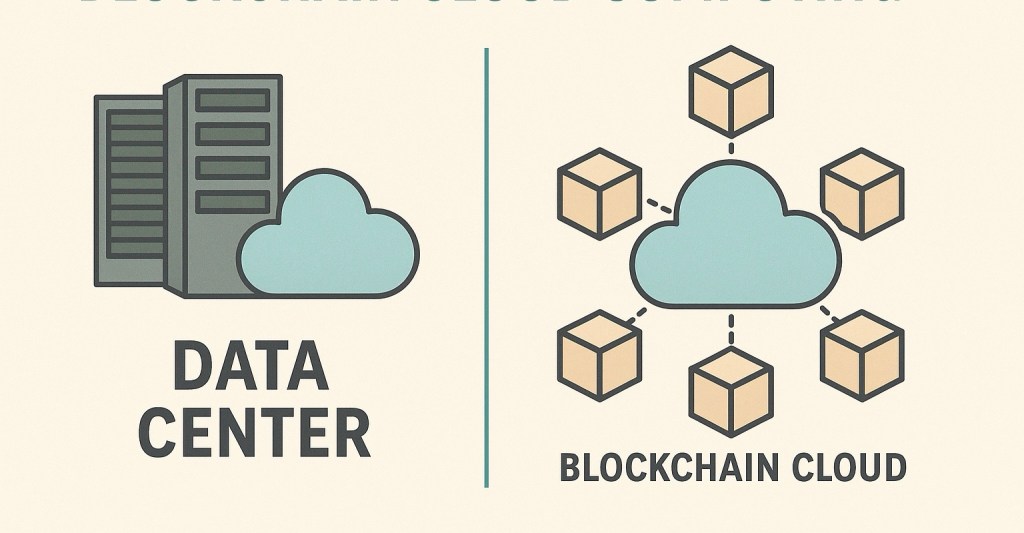
Blockchain-Based Cloud Computing
Blockchain distributes data across many nodes, removing single points of failure and increasing resilience. It is cheaper infrastructure like IPFS (InterPlanetary File System) or Filecoin can store data more affordably. It has data sovereignty at the core as users can control where their data lives and who can access it.
That’s perfect for AI regulation, compliance, and enterprise transparency but it takes time.
Cloud computing was revolutionary, but it wasn’t the endgame.
We’re entering a phase where hybrid, on-prem, and blockchain-based decentralized cloud will co-exist. Large enterprises will build their own AI infrastructure using open source LLMs, while decentralized networks will offer flexible and cheap compute for everyone else.
 Mohsin With E
Leave a comment