Remember my blog post about the Prisoner’s Dilemma (Game Theory #1)? That was about a one-time event where prisoners have to make a choice. But in real life, we go through a series of repeated events like repeated Prisoner’s Dilemmas.
Should we always cooperate or should we betray sometimes if the other is keep betraying ?
This issue was explored by political scientist Robert Axelrod in the 1980s. He organized a tournament of computer-simulated strategies, inviting researchers and developers to submit programs that would compete in a repeated version of the Prisoner’s Dilemma.
He wanted to see what kind of strategy wins in the long run, and whether some level of betrayal can actually help.
Here are the main strategies that were tested in Axelrod’s famous competition:
Tit for Tat: Start by cooperating, then mirror your opponent’s previous move. If they cooperate, you do too. If they betray, you betray back.
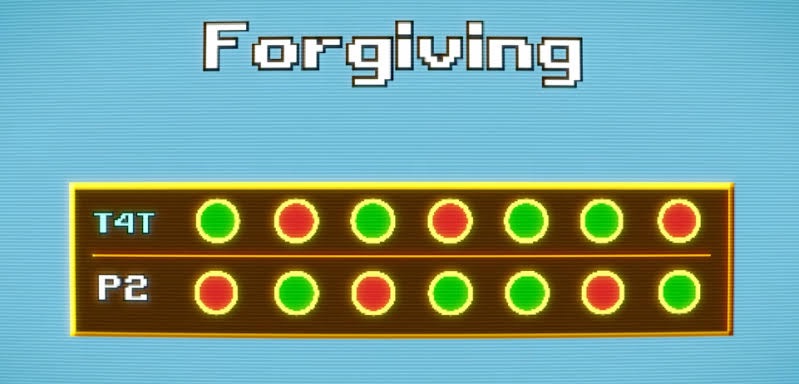
Tit for Two Tats: A more forgiving strategy, if your opponent betrays, you let it slide once. If they betray again, then you retaliate.
Grim Trigger: If someone betrays you even once, you stop cooperating with them forever.
In real life, how you treat people especially in repeated interactions can make or break your success.
Axelrod’s experiment was reflection of real human behavior and showed us something powerful.
Tit for Tat was the winner.
It performed best because it had the right balance between cooperation and punishment. It wasn’t too aggressive, and it wasn’t overly forgiving either.
Using this game theory, in your real life, start with cooperation. But if you see betrayal, respond with Tit for Tat. If the other side goes back to cooperating, you cooperate too.
 Mohsin With E
Leave a comment