In my sleep, I was chased by everyone.
It was detailed, like I was in reality.
Then I woke up and saw myself in a holiday house, at the start of the day.
But was it sleep or reality?
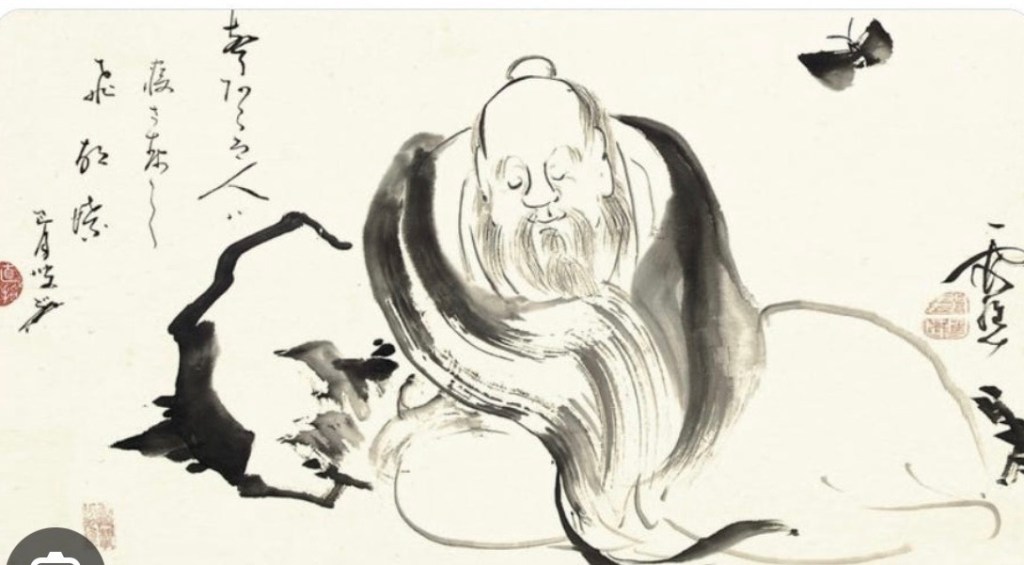
The butterfly dream:
Zhuangzi, a Chinese philosopher from 2,300 years ago asked this question which is known as the butterfly dream.
One night, he dreamed he was a butterfly.
He was not aware of being Zhuangzi.
He was just a butterfly.
Then he woke up and was Zhuangzi again.
He asked:
Was I Zhuangzi dreaming I was a butterfly,
or am I now a butterfly dreaming I am Zhuangzi?
He did not answer it ( I wish he did).
I think the point was not confusion.
The point was the limits of knowledge and our overconfidence in understanding reality.
Why do people believe the day is real and sleep isn’t?
Looking through the lens of physics:
Physics, at its core deals with laws that reality remain consistent and can be measured.
From a physics point of view, sleep and wakefulness are not two worlds.
They are two states of the same physical system.
Waking life can be measured consistently across observers, physics treats it as more reliable.
Physics does not say waking life is more real.
It only says it is more consistent.
Back to my morning…
I had a run in the morning.
Then had a large extra hot cappuccino.
All of it felt consistent.
Verifiable by others.
Same daily pattern which as per physic is more real.
That pattern gives confidence to us that we are dealing with something real.
I am not convinced yet…
My mind did not stop thinking about it.
Adding Nick Bostrom’s simulation theory to my thoughts.
Bostrom argues that if advanced civilizations exist, and if they run simulations, then statistically we are in their simulation not a reality.
It resonates because video games are so advanced that AI-driven non-players can even believe they’re real within our simulated worlds.
So I ask:
What if waking life is the tightly scripted layer of the simulation, consistent, rule-bound, freedom-limiting.
While night dreams are a less controlled simulation?
Waking life as a controlled simulation:
In this theory, the awake state is designed by creator to follow strict physical rules.
Those rules restrict freedom but create consistency.
That consistency gives the illusion of reality.
This aligns with Bostrom’s idea:
If we are in a simulation, consistency is just good programming.
We would be like NPCs (Non-player characters) in a game limited by rules defined by the creator.
It feels real precisely because those rules are enforced.
Night dreams as an uncontrolled state:
In sleep, sensory input shuts down.
External constraints weaken.
If this were a simulation, dreams could be a space where the system is less monitored or not monitored at all.
Lucid dreaming as “God mode”:
Here is the punchline…
With lucid dreaming, you gain control from creators.
You alter the environment.
You bend the rules.
If waking life is a controlled simulation, lucid dreaming would be hacking the code.
If we were in a simulation, lucid dreaming might be the closest experience we have to stepping outside its strict rules.
If consistency is all we use to define reality,
what happens when consistency breaks.
and we still feel fully alive inside it?
 Mohsin With E
Leave a comment