I was asked to fix a broken, complex, organization-wide process that had been building up incorrectly for over a decade, leading to massive operational inefficiencies.
The ask was to fix it solo, across 100+ teams, with no formal authority, and under intense weekly pressure from several management layers up to the CEOs.
The mandate was urgent: not just to report quick wins each week, but to deliver tangible progress weekly. (It wasn’t a joke but real unrealistic ask).
Maybe I was part of experiment or they were testing boundaries. Either way, the ask was aggressive far beyond my role and authority sold as a growth opportunity.
The challenge was as big as the org chart itself. One CEO managed a third of the business, another co-CEO handled another third, and the rest reported directly to the board.
My orders: “fix it ASAP,” even though the root problem wasn’t clear.
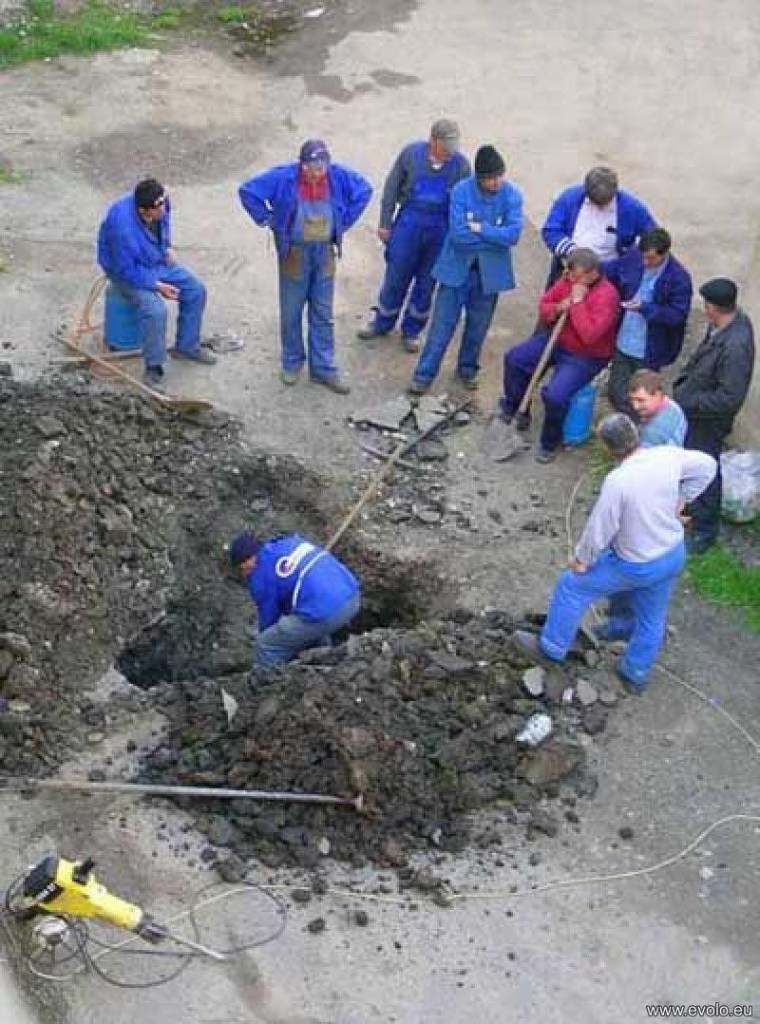
The first image that came to mind was of a lone worker digging a hole, surrounded by supervisors and managers. One person is down in the trench with a shovel, while the rest watch, comment, and give orders.
Finding the Problem
I started with a deep data dive for four weeks, querying and merging tables, creating metrics, and analyzing every angle. Initially senior leaders were happy with the insights, and I documented everything: problem areas, trends, and some potential solutions.
But after a few weeks, I was told I was facing “analysis paralysis” focusing too much on data less execution.
The initial two-year timeline was reduced to just a few weeks, with only myself on the job. Anxiety, lack of sleep, and pressure built up. Either I was doing it wrong, or there was a gap between expectation and reality that I had to bridge. No one really understood the real issue. No one asked for my data stories or questioned the analysis just deliver results.
Directors, VPs and SVPs all wanted a quick win to impress the CEO.
The solution was not reviewed or approved by engineering team, the solution for each team was different but they wanted a blanket solution that could break things.
Like in the image, I felt my digging faced a rock instead of soil. I was blamed for not moving forward.
I whispered…
“We need to clearly define the right problem, at the right time, with the right people.”
Why We Get Stuck
The issue wasn’t leadership’s lack of awareness. It was a choice to save costs and resources, trying to solve a big problem with the least investment or using one person as a test case to gauge real complexity.
It reminds me of the old coal mine practice of bringing canaries to detect toxic gases if the canary shows distress, danger was present.
Organizations sometimes “test” big initiatives the same way: using a single person or small team to probe for hidden obstacles.
I was the canary here who was distressed.
A kind VP suggested to read a book: “How to Change Things When Change Is Hard” by Chip Heath and Dan Heath.
The key message: lasting change requires clear motivation, precise direction, and a supportive environment. In my case, motivation (and pressure) were abundant, but direction and support were missing.
Key lesson for me:
If you’re tasked with massive change, clarify expectations early and don’t fall into the leadership trap:
- The right team, tools, and time are essential.
- Leadership buy-in is the basic, but cross-functional support is critical.
- Define the true problem, not just the visible symptoms.
- Lasting change needs a clear direction. With confused leaders you get nowhere.
 Mohsin With E
Leave a comment