In a high-intensity group gym class, you push your body to the limit.
Not slowly. Not gently. Bit hard, like you are fighting for your life in a jungle.
That point where your lungs burn, your legs shake, and your mind has no spare energy left.
There is only breath.
And pressure.
That is when something shifts. You can’t fully catch your breath, but you keep going anyway. Thinking stops. Not because you try to stop it there’s just no room for it anymore.
The mind goes quiet.
You look around.
People are just… people.
No judgment.
No attraction.
You witness bodies breathing, moving and struggling, just like you. You see similar bodies with the same goal, forming a connected web.
You grow awareness.
But you’re not attached to any of it.
This is the witness state.
You’re watching yourself push. Watching others do the same. A connected room, sharing one effort, one rhythm, one goal.
When you see people including yourself with no judgment, no attraction, no thought just as they are, that’s witnessing.
You’re no longer inside the noise.
You’re standing just behind it.
It feels strangely Calm.
The witness state is not peaceful because life is easy, peaceful because the mind stopped interfering.
The witness state is the beginning of something greater, a non-dual awareness where the boundary between “me” and “others” becomes blurred.
When you observe all as connected.
When separation has no meaning.
Experiencing this state can happen towards the end of a marathon or during deep meditation. It’s a place where worries fade away, and people are not seen as roles or objects but as parts of a bigger picture. It’s almost like observing life from God’s view.
“Everything we see is just a thought inside a single, infinite consciousness.” – Principals of Mentalism
I know a curious six-year-old who constantly asks, “What if?”
What if the wall collapses when we leave the house?
What if the roof falls?
What if the ocean overflows while everyone else is playing at the beach?
The worries never stop. Sometimes he even needs to write a plan for tomorrow just to feel okay.
His parents got worried. Doctors. Psychology. Tests. Seeking help.
It’s easy to jump to conclusions and think something is wrong.
But in reality, kids like this have a unique gift.
They are natural-born overthinkers.
Studies show that around 20–30% of people naturally overthink, and it often shows up at a very young age. This isn’t anxiety by default. It’s a mind that dives deep into details, explores every angle, and keeps asking “what if?”
Look closely and they’ll surprise you with questions no one else even thinks to ask.
Don’t rush to label them.
They have a superpower.
Create a safe space where they can express their worries and channel their curiosity into something meaningful.
If this kid rips up a drawing ten times because it’s “not right,” give them time.
They feel something is missing. Something hasn’t been considered yet.
After ten rips, creativity shows up.
They don’t thrive in rushed, loud, low-quality environments.
Overthinkers thrive in slow, deep and thoughtful environments where they can be creative.
Give them time. Let them explore. Watch overthinking turn into creativity.
Don’t say:
“What’s wrong with you?”
“Why are you doing it again?”
They’re solving a complex puzzle in their mind, searching for the missing piece.
Their brain is a highly analytical machine, constantly connecting dots.
The kid I know spent years under tests, scans, doctors, neurologists, psychologists.
No diagnosis. No clear answer.
By twelve, he knew there was nothing wrong with him.
He started reading detective books. Solving complex puzzles.
He grew into a career that requires deep technical thinking, building bridges between teams, mapping dependencies, seeing systems others can’t see.
Now that kid is a grown man.
And he has a young boy who also asks constant “what if” questions.
What he said to his son?
“You have a superpower. Nothing is wrong with you. You’re just trying to solve a puzzle bigger than your age.”
And the boy felt safe.
And powerful.
“Overthinking is deeply misunderstood. It was never meant to be stopped, only guided because stopping it breaks the strength behind these minds.”
I was asked to fix a broken, complex, organization-wide process that had been building up incorrectly for over a decade, leading to massive operational inefficiencies.
The ask was to fix it solo, across 100+ teams, with no formal authority, and under intense weekly pressure from several management layers up to the CEOs.
The mandate was urgent: not just to report quick wins each week, but to deliver tangible progress weekly. (It wasn’t a joke but real unrealistic ask).
Maybe I was part of experiment or they were testing boundaries. Either way, the ask was aggressive far beyond my role and authority sold as a growth opportunity.
The challenge was as big as the org chart itself. One CEO managed a third of the business, another co-CEO handled another third, and the rest reported directly to the board.
My orders: “fix it ASAP,” even though the root problem wasn’t clear.
The first image that came to mind was of a lone worker digging a hole, surrounded by supervisors and managers. One person is down in the trench with a shovel, while the rest watch, comment, and give orders.
Finding the Problem I started with a deep data dive for four weeks, querying and merging tables, creating metrics, and analyzing every angle. Initially senior leaders were happy with the insights, and I documented everything: problem areas, trends, and some potential solutions.
But after a few weeks, I was told I was facing “analysis paralysis” focusing too much on data less execution.
The initial two-year timeline was reduced to just a few weeks, with only myself on the job. Anxiety, lack of sleep, and pressure built up. Either I was doing it wrong, or there was a gap between expectation and reality that I had to bridge. No one really understood the real issue. No one asked for my data stories or questioned the analysis just deliver results.
Directors, VPs and SVPs all wanted a quick win to impress the CEO.
The solution was not reviewed or approved by engineering team, the solution for each team was different but they wanted a blanket solution that could break things.
Like in the image, I felt my digging faced a rock instead of soil. I was blamed for not moving forward.
I whispered…
“We need to clearly define the right problem, at the right time, with the right people.”
Why We Get Stuck The issue wasn’t leadership’s lack of awareness. It was a choice to save costs and resources, trying to solve a big problem with the least investment or using one person as a test case to gauge real complexity.
It reminds me of the old coal mine practice of bringing canaries to detect toxic gases if the canary shows distress, danger was present.
Organizations sometimes “test” big initiatives the same way: using a single person or small team to probe for hidden obstacles.
I was the canary here who was distressed.
A kind VP suggested to read a book: “How to Change Things When Change Is Hard” by Chip Heath and Dan Heath.
The key message: lasting change requires clear motivation, precise direction, and a supportive environment. In my case, motivation (and pressure) were abundant, but direction and support were missing.
Key lesson for me: If you’re tasked with massive change, clarify expectations early and don’t fall into the leadership trap:
The right team, tools, and time are essential.
Leadership buy-in is the basic, but cross-functional support is critical.
Define the true problem, not just the visible symptoms.
Lasting change needs a clear direction. With confused leaders you get nowhere.
During the school holidays, the kids had been enjoying fun activities. Then we set off for a bushwalk in the national park. At the start of the walk I heard it:
“Boring…”
I’ve heard this word many times in such situations.
When something needs patience, deep focus, or more attention, kids (and mostly adults too) call it “boring”.
But what if that boring moment is actually a hidden opportunity?
Think about it.
The crowd always follows excitement. Noise. Fun. Fast reault.
The “boring” activities are the ones left untouched and that’s exactly why they have more potential.
For example, coding looks boring. Long hours. Staring at a screen. Repeating the same thing again and again.
But the ones who do it day and night, with passion without seeing it as boring end up being the next Elon Musk.
Reading books and writing feel boring too. Who reads book when you can play video games?!
Boring…
But only few who read and write nonstop while others having fun, eventually shape the world through their words, like Shakespeare.
Boring means the opportunity…
When we shift our mindset and see boredom as a door to opportunity, everything changes.
A boring activity is a missed opportunity because people avoid it. So find the boring one you enjoy and keep doing it.
That boring bush walk was actually a chance to slow down.
To observe.
To reflect.
And in those quiet moments, something important grows: curiosity, patience, resilience.
I explained this reflection to my daughter.
I asked her to try one thing:
Every time the word boring comes to your mind, replace it with opportunity.
This whole thought started with Peter Thiel’s idea of stagnation that real progress has slowed down. Thiel argues that AI is the only truly transformative invention of the 21st century.
I don’t agree.
And here’s why.
When I look back at the last thousand years, every century had at least one true invention. By true invention, I mean something that:
was not imagined before
was not forecasted before
had no idea before
was beyond human comprehension
Something that made people stop and say: “Wow, this shouldn’t be possible.”
You want example?
Consider Nikola Tesla’s public demonstration on May 20, 1891, at Columbia College in New York. He successfully transmitted electricity wirelessly, lighting lamps without any infrastructure or prior roadmap. He used newly invented alternating current electricity entirely on his own, without anyone else iterating towards this goal. This is a true invention.
Almost every century over the past 1000 years had something like this:
13th century: mechanical clocks 15th century: the printing press 17th century: the telescope 18th century: the steam engine 19th century: electricity 20th century: airplanes, nuclear energy, computers, and humans landing on the Moon on July 20, 1969.
There were also extreme attempts: early flying machines, artificial humans, mechanical life. They didn’t work, but they showed people were trying to break reality, not just optimize it.
Now look at the 21st century.
Something shifted.
We quietly replaced invention with innovation.
Quantum computing is a good example. People talk about it like it’s new, but the foundation goes back much earlier than Richard Feynman. Quantum mechanics started in 1900 with Max Planck, then exploded in the 1920s with Schrödinger, Heisenberg, and others. Feynman, in the 1980s, simply connected those ideas to computation.
AI is the same story. The roots go back to the 1950s , Alan Turing, John McCarthy, early neural networks. What we have now is scale: more data, more compute, better hardware. Powerful but not a new idea.
Even rockets. Reusable rockets are impressive, but the physics and core designs were worked out long ago. We are refining, not discovering.
Same with software. We use libraries written by others mostly long ago, stack frameworks on frameworks, and call it “new.” It works , makes money but not true invention.
This century isn’t short on intelligence.
It’s comfortable.
By 2025, we have 60 million millionaires, 3,000 billionaires and trillion-dollar companies. We also have enough food, energy and wealth although not distributed fairly. People constantly say “We already have enough” but that’s simply not true.
Why risk everything to invent something incomprehensible when optimizing existing systems still makes you rich?
That mindset is everywhere.
Now we’re openly hearing another idea: humans won’t need to contribute much anymore.
Who said?
Sam Altman has repeatedly talked about universal basic income as a future necessity in an AI-driven world.
Elon Musk has also publicly supported UBI and even suggested that AI-driven abundance could lead to a form of universal high income.
The message underneath is the same:
AI will do the work.
Humans will stay home.
Working and driving to innovate is optional.
That’s where it clearly feels like a decline.
A human ambition decline.
We didn’t stop inventing because we reached the end.
Once upon a time, about 1,200 years ago, in a land called Persia, a curious boy named Muhammad al-Khwarizmi was born.
Muhammad loved questions.
He loved learning.
Most of all, he loved books.
As he grew older, his love for knowledge took him on a long journey to a great city called Baghdad. There, he discovered one of the most amazing places in the world at that time: the House of Wisdom, the largest library in the world during that time.
The House of Wisdom was not just a library.
It was filled with books, ideas, and scientists from many different places. People studied numbers, stars, maps, medicine, and much more.
Muhammad read as many books as he could and taught himself everything he could learn, from mathematics to astronomy.
One day, Muhammad noticed a big problem.
Farmers, builders, and shop owners were often confused by numbers.
One farmer would say,
“Half the land should be mine.”
Another would say,
“No, I should get double!”
They didn’t have a clear way to solve these problems. So they guessed… and guessed… and guessed again.
Muhammad thought carefully.
“These problems are like puzzles with missing parts” he said to himself.
“Some parts are missing, but the pieces are connected. What if we could name the missing part instead of guessing?”
So he had a brilliant idea.
He gave the unknown a name.
He called it “the unknown” (later written as letters like x).
Then he showed how to keep both sides of a problem balanced.
He called this new method “al-jabr,” which means “fixing balance.”
With al-jabr, people could solve problems step by step, without guessing. One unknown… then two… and even more like X, Y ,Z. Problems that once felt impossible suddenly made sense.
Muhammad wrote his ideas in a book so others could learn from them. Over time, his book traveled across the world. People began calling it algebra.
Today, children all over the world learn algebra in school.
They may not know Muhammad al-Khwarizmi’s name, a curious persian boy,
but they use his ideas every day.
And that is how one curious boy helped bring balance to numbers.
and changed how humans solve problems forever.
We owe a lot to people like Muhammad al-Khwarizmi, whose curiosity helped bring balance back to the world.
Life is full of uncertainty, full of perceived bad and good events that make you sad or happy. This makes you anxious and unstable. There are two words that, if you remember, will stabilize your emotions, calm your mind, and reduce your anxiety.
Read this story first:
We’ll See, Said the Farmer
In Bluey’s episode “The Sign,” a school teacher tells the kids a story about a farmer. One morning the farmer wakes up to find his horse has run away. Everyone in the village says it’s bad luck, but the farmer says: “Will see.” The next day, the horse returns and brings a group of wild horses with it. Now the villagers say it’s good luck, and the farmer repeats: “Will see.” The next day, the farmer’s son tries to ride one of the wild horses and falls, breaking his leg. Everyone says it’s bad luck again but the farmer says: “Will see.” Later that day soldiers come to take all the young men to war but they leave the farmer’s son behind because of his broken leg. Now, the neighbours call it good luck, and the farmer repeats: “Will see.”
Trust the path, because the outcome of good or bad will reveal itself. Remember, you are just a tiny fragile human in an ocean of uncertainty and complexity.
The world in the next forty years will change dramatically. Not only because of AI, but because the global power dynamic will shift. Food systems will be disrupted. Energy from the grid will be limited. Work might become optional. Universities might lose their importance.
So the real question is how you prepare yourself and your kids for a future?
This is my list survival and win list:
Languages:
Knowing one language is not enough anymore. English helps you survive. Mandarin, Spanish, Hindi, or Arabic will open the door to the future possibilities. The more you understand the world, the more back door you have.
School and skills:
Computer Science, AI, and vocational skill will matter.
You need to know how to think and how to build. Doctors, lawyers, and any other professionals are not needed.
Food security:
Because of power dynamic shifts, global supply chains will be disrupted. Learn to grow your own food. A backyard with fruit trees, vegetables, a chicken coop, a small fish pond, and bread making skills gives you freedom and independence.
Power security:
Energy independence will become a big deal. Solar panels, batteries, small wind systems, and a basic radio network can keep you connected and safe when systems break.
Escape plan:
Hold more than one passport. Choices give you stability. We don’t know which country is the future winner or loser.
Money:
Do not put everything into one basket. Always keep some gold coins. Buy crypto but only stable coins.
New money:
In the future, story telling becomes a currency. People who can inspire, teach, and influence will have an advantage.
Prepare early. Teach your kids slowly. Build skills that last. The future belongs to people who are prepared, practical, and flexible.
I want my 9-year-old to understand why we say “parents know more”. She often resists and says “I know more” so I have to remind her that the legal age to make independent life decisions is 18 for a reason. She understands science better, so I used science today to explain it:
Our brain has different sections. The cortex or cerebrum is the big thinker. It is the part in charge of planning, understanding consequences, problem-solving, and making decisions. It’s the “smart supervisor” of the whole brain, the blue part.
The front part of the cortex, called the prefrontal cortex, keeps growing from the day you are born. By around age 18, it is about 80 percent developed. Almost there but it will be fully grown when you are 25. That means as you get older, you can understand things more deeply and make smarter decisions. The light blue part is the “ultimate planner” which is keeps getting better.
This is not about the brain being too small or not having enough neurons. Let’s call the brain’s neurons “little scientists”.
What’s still developing are the connections between them. Imagine you have 15 billion of scientists inside your mind but they don’t yet know how to talk to each other 🥺. Slowly, they learn each other’s language and start communicating.
Imagine a team of scientists talking to each other in a “messenger kid group chat” providing you with guidance to make clear, calm, and wise decisions.
Maryam Mirzakhani was one of the greatest mathematicians in history.
She was the first woman ever to win the Fields Medal, which is the highest award in mathematics. When she was still a teenager, she also won two gold medals at the International Math Olympiad.
Maryam passed away at the young age of 40 due to cancer, but in her short life she accomplished more than many people do in a lifetime. She solved problems that had confused mathematicians for decades.
I shared her story with my daughter because I wanted her to see what is possible when someone is curious, brave, and willing to think differently.
The Problem: Random Paths on a Bumpy Surface
Maryam studied a very strange problem.
Imagine you have a bumpy globe, like the Earth but with hills and valleys.
If you roll marbles on it, the marbles don’t follow straight lines. They twist, turn, bounce, and look completely random.
It seems impossible to predict where a marble will go next. Mathematicians called this chaotic movement. For years, no one could find a clear pattern and predict the next move of the marbles!
Maryam’s solution: Unfolding the Chaos
Maryam had a brilliant idea.
Instead of staring at the confusing, bumpy globe, she imagined unfolding its surface into long, flat sheets.
These sheets are called Riemann surfaces, and they allowed her to see what others could not.
Once she created those imaginary flat surfaces, the marble’s path which looked messy on the globe became a simple, repeating pattern on the flat sheet.
Maryam spent her whole life learning mathematics with passion and love. And when she faced big problems, she looked at them in a new way with creativity and imagination.
The world is a better place today because of the smart people who never stopped learning. The best way to thank them is to stay curious and keep discovering new things. In this way, future generations will remember you like we remember her.
Not long ago, my nine-year-old daughter had a habit of telling little lies. Therefore, I decided to enroll her in an ethics class, hoping it would help her understand the difference between right and wrong. After her first class, she came home excitedly saying, “Oh my God, the lesson was all about lying! I really get it now, and I don’t think I’ll lie again.”
However, a few days later, she mentioned something surprisingly: “Dad, I think I’m lying more now.” She seemed puzzled.
What actually happened was that her self-awareness had grown.
Imagine if I asked you, “Do you know how many yellow cars are on the street?” You might say, “I don’t know.” But then I encourage you to pay attention and start counting them. Over time, you’d notice more and more yellow cars.
Physic scientist Thomas Young called this “the observer effect” around 200 years ago. This means when we focus on something, we become more aware of it.
So, the ethics class didn’t cause her to lie more, it made her more self-aware of her actions. Self-awareness helps you understand your strengths and weaknesses of yourself, making it easier to identify areas for improvement. This is a key element of a growth mindset.
I love seeing her at this stage of life growing self-awareness. It’s important to be mindful of every action, whether it’s about honesty, stress, calmness, or any other aspect of our behaviour.
Some moments stay with us forever, shaping who we become.
When I was very young, I missed a moment that never left my memory. A person I cared about encouraged me to speak, but I was too shy and reserved. I froze. That silence became a reminder not to let fear hold me back from life’s opportunities.
This memory has a philosophical truth: “lack of leap of faith”.
Søren Kierkegaard, the father of existentialism, spoke of the “leap of faith.” It means believing in something bigger and taking action even when the outcome is uncertain, even when it makes us vulnerable.
I still remember that moment clearly: the breeze on my skin, the silence, the hesitation. I didn’t take that leap of faith because I was afraid of what might happen.
By reminding such moments , I’ve learned that exposing my vulnerability and trusting the faith can lead to growth.
Sometimes, the greatest lessons come from the moments of failure and awareness of what was missing.
I was packing lunch boxes while my kids were watching “Bluey”, the episode called “The Sign.” In that episode, Bluey’s dad gets a new job in another city, with better pay, which means the family has to sell their home and leave behind all their memories. The kids and mum are sad. At the end, when the dad decides not to take the job and stay in their small city, everyone cheers and hugs him.
That’s when my little boy said loudly, “I love this part.”
I paused. My hands were still busy arranging sandwiches, but my eyes suddenly filled with tears. Just moments before, my mind had been occupied with Arthur Schopenhauer’s idea that desire is the force driving the universe. He called it “the will”, an invisible gravity that pulls all living beings to keep wanting, chasing, striving.
You get one thing you desire, and almost instantly, another appears like hunger. A better job. A higher degree. A new city. A different life.
When my son said, “This is the part I like,” and I looked at the screen, something cracked open inside me. I couldn’t hold back the tears.
This idea from scientific view is like desire lights up the brain’s dopamine system. It’s not the reward that drives us, it’s the chase. Once you achieve something, chase ends, dopamine fades, and the mind searches for the next one. But to find inner peace, you have to learn to step outside that cycle of chasing.
You may not be able to stop desiring because it is a built-in feature in humans, but you can understand it, manage it, and sometimes, pause it.
The only way to give you control of being able to step out of the loop is “awareness”. Finding small moments of joy with your child, listening to music, or walking in nature or art can calm the mind and remind you what truly matters.
I found the resolution to my thoughts in my child’s words, in a cartoon about love, and in a tear that reminded me: sometimes, the richest moment is right here, already happening if only we stop chasing the next one.
In one of our science nights, I will give you this lesson:
let’s talk about two cool ways scientists understand the world around them.
The first is called “empiricism”. Imagine when you were little and learned about fruit by tasting it. You found out sugar tastes sweet because you experienced it yourself. That’s empiricism: learning through your senses, seeing, hearing, touching, tasting.
The second is called “rationalism”. Think about how Einstein figured out that gravity bends space without traveling to space himself. He used logic and mathematics to understand it. That’s rationalism: usingreason and critical thinking to figure things out, even if you can’t see them directly. It’s like you noticed cherry blossoms and a change in the weather and guessed that spring has started and it was exactly the first day of spring.
Scientists often use both.
We’re all scientists without knowing it. Science is about knowingly gathering information and thinking about it.
To learn more about the world, try using both methods. There are three simple steps to learning:
1. Try new things
2. Observe closely with all your senses
3. Imagine and reason about what you see.
Next time we go for a walk, let’s try a new path. As you pass trees, listen to the sounds, smell the fresh air, then touch the leaves. Use all of your senses in that new environment. Then ask yourself the why, what, and how. Why the color of leaves changed, what, how…
When I was looking at the job market in tech hubs, I noticed a pattern: companies weren’t just hiring domain experts but were also demanding data literacy and coding skills across almost every role. Some, like X are hiring large numbers of AI tutors for different departments to upskill their existing workforce.
In big tech, the expectation is clear: new hires should be able to build end-to-end products like developers and also bring able to analyze, understand and tell story about data. Storytelling with data is no longer a “data science ” skill which is not “nice to have” but a baseline. And development skills are essential not just for talking about ideas, but for shipping products fast and iterating in real time. In future with thousands of customized softwares, you need everyone to be developer.
In the future, being a domain expert will also mean being your own data scientist and developer. Twenty years ago, knowing how to use a computer was the game changer. Soon, coding and data literacy will play the same role. The earlier we embrace this, the better prepared we’ll be for tomorrow’s jobs.
This shift creates two categories of professionals:
The multi-skilled: those who perform in their own domain while also being their own data scientist and developer.
The passive: those who give up their job to AI, relying on Universal Basic Income (UBI) while AI handles their old job.
Category one will thrive. Imagine a project manager who not only manages projects but also designs an AI-led agent to oversee 100 sub-agents, iterates on the tool quickly, and presents clear insights to executives, all while excelling at traditional project management.
Every single successful person has followed the same pattern: “dream big from childhood.” But the triggers that sparked this dream were different. Some watched the first landing on the Moon. Some grew up hungry but saw billionaires on TV.
For you, my daughter, who is living a good life, I need to create that trigger. Watch every SpaceX Starship test flight together, learn the magic of coding your own game, and listen to stories that spark ambition.
And I prefer stories!
This is tonight’s Story that you will here from me:
Imagine you’re dropped in the middle of a huge, dark forest. Your mission: find a treasure box and escape first.
You are one of ten contestants. But everyone lands with different tools:
Some have boots and a backpack. Some have food and a tent. Some are barefoot with nothing.
That is life. Where you are born, your family, your wealth, that is your starting privilege. Unfortunately this is not within your control.
I was barefoot with nothing. I was born in a small city with little opportunity. I fought for everything I have. Some who were born at the same time had head start, they were born in wealthy countries with every advantage, best schools, money, connections.
Where I am standing now with what I have gained, I am the only one with no tools in the forest. I had determination.
So, who do you think wins? The one with the best equipment and head start ? Or the one with determination? Or the one with both?
I can give you privilege and tools so you don’t start empty-handed. You will have a good start, but the rest depends on your hard work and ambition.
One of the greatest tools in the forest of life is education. Education is like direction in the dark. Some schools are like paper maps. Some are like compasses. But the world’s best universities are like Google Maps guiding you directly to the treasure.
I studied in five universities across three countries. I can tell you: a top university is your winning card.
Let’s look at the most influential billionaires and scientists. Almost all studied at the Top 10 universities in the world.
1. Harvard University (USA):
Bill Gates: Microsoft founder, worth about $120 Billions . Mark Zuckerberg: Meta (Facebook) founder, net worth ~$120B. John Enders: “Father of modern vaccines,” winner of Nobel Prize, saved millions of lives.
2. Stanford University (USA):
Larry Page & Sergey Brin: Google founders, combined net worth ~$200B. Elon Musk (briefly studied) : Tesla & SpaceX, net worth ~$230B. Sally Ride : First American woman in space, inspired generations.
3. MIT – Massachusetts Institute of Technology (USA):
Richard Feynman: Nobel Prize in Physics, a great physics scientist who shaped modern quantum theory. Drew Houston: Dropbox founder, billionaire (~$2B). Kofi Annan: United Nations (UN) Secretary-General, Nobel Peace Prize winner, he changed world diplomacy.
4. University of Cambridge (UK): Isaac Newton: Gravity & laws of motion, foundation of modern science. Charles Darwin: Theory of evolution, he changed biology forever. Stephen Hawking: Black holes, bestselling author, global science icon.
5. University of Oxford (UK):
Tim Berners-Lee: Invented the World Wide Web, changed how the world connects. Stephen Wolfram: Created Wolfram Alpha, Mathematica. Ratan Tata: Billionaire industrialist, transformed India’s industry.
6. Caltech: California Institute of Technology (USA):
Gordon Moore: Intel co-founder, billionaire, creator of “Moore’s Law.” Linus Pauling: Two-time Nobel laureate (Chemistry & Peace). Kip Thorne: Nobel Prize in Physics, proved gravitational waves exist.
7. Princeton University (USA):
Jeff Bezos: Amazon founder, net worth ~$180B. Alan Turing: Father of computer science, cracked Nazi codes, saved millions.
8. University of Chicago (USA): Milton Friedman: Nobel Prize in Economics, shaped global markets. James Watson: Co-discoverer of DNA structure, revolutionized genetics. Satya Nadella : Microsoft CEO, billionaire leader (~$1B+).
9. Columbia University (USA):
Barack Obama – U.S. President, Nobel Peace Prize, changed global politics. Robert Kraft: Billionaire businessman, New England Patriots owner. Richard Axel – Nobel Prize in Medicine (discovered smell receptors).
9. ETH Zurich (Switzerland):
Albert Einstein: Theory of Relativity, Nobel Prize, changed physics forever. Ursula Burns – First Black woman CEO of a Fortune 500 company (Xerox). Niklaus Wirth – Created Pascal programming language, shaped computing.
I am reading patterns, patterns of success, and I share them with you. Also know that there are tons of people who got out of the forest and found treasure without Google Maps. So don’t feel pressured but know the path will be easier if you dream big and aim for the best university from now on.
Remember, I will be proud of you no matter who you become or don’t become. Even if you choose not to go to a top university, or not to become a famous scientist or billionaire, but simply live as a normal person enjoying life, I will still be proud of you.
Bureaucratic Trap is a known dilemma in big tech when they hire the best and brightest talent to drive massive innovation and revolutionary change. Examples are legacy tech companies recruiting overqualified or talented candidates in the hope they can transform outdated, non-innovative cultures.
They are fully aware of what Peter Thiel said:
In a world that’s changing so quickly, the biggest risk you can take is not taking any risk.
This gets more relevant in the age of AI.
But once those top talents are inside, these innovators often get stuck in the same bureaucratic machinery layers of approvals, centralized compliance processes, red tape, and endless reporting. Instead of breaking barriers, they end up battling the system itself. The result is boredom, frustration, and ultimately burnout, as their creativity is stifled and their sense of purpose erodes.
“For top talent, the real danger isn’t burnout — it’s boreout.”
The core problem lies in the clash between hiring brilliant innovators and forcing them into rigid systems that prevent real impact.
Why hire overqualified talent then?
The irony is that organizations bring in these brilliant minds for fresh ideas, prestige, and credibility. On paper, it signals seriousness about innovation. In practice, the environment constrains them.
Imagine deploying the world’s most advanced LLM internally but spending months adding legal constraints and compliance policies to the parameters until its responses become so restricted that the value is lost.
Or picture employees required to complete extensive compliance training to just learn how new application can be approved.
Or think of a groundbreaking idea that gets revised for months by layers of leadership before reaching a senior VP. By the time it goes up, the message is lost, and the solution is redirected into something far from the original vision.
Large organizations are masters at maintaining stability which provide predicted profits for stakeholders.But this very stable structure that ensures success is also the reason they struggle to innovate.
The Solution?
The answer isn’t endless restructuring but creating small, empowered sandbox teams that report directly to senior leadership, free from the hierarchy and approval chains. Give these teams real autonomy, shield them from bureaucratic drag, and put the very best talent there.
That’s where genuine innovation has a chance to thrive.
Listening to the podcast The Diary of a CEO, I came across the interview with Geoffrey Hinton (like to video) often called the “Godfather of AI” for his 50 years of work pushing the boundaries of artificial intelligence. Hinton, a Turing Award winner and teacher of current young AI leaders like Ilya, is now warning the world about the risks of AI.
From his perspective, the major risks are:
1. Misinformation & Deepfakes: AI can generate convincing fakes, distorting trust.
2. Job Displacement: Routine intellectual work is at risk of automation.
3. Autonomous Weapons: Machines making life-and-death decisions without humans.
4. Political Manipulations: Supercharged propaganda targeting elections or ideas.
5. Super-intelligence: AI outsmarting humanity.
Then I started listening likelihood and impact of each:
History shows us that in every major technological shift from the Industrial Revolution to the digital age the true force of change came from impact, not just likelihood. As AI evolves, we must keep our focus on the risks with the greatest potential impact, especially the existential threat of superintelligence. Preparing today is the only way to safeguard tomorrow.
My daughter is entering her teenage years, and sometimes it feels hard to connect with her. She gets angry more often, and one phrase I hear a lot is: “What’s wrong with you?” She’ll throw it out during a simple conversation, then walk away, get upset, or escalate the moment.
I’ve tried different approaches like being calm and supportive, enforcing discipline, and a few other strategies but not working. That phrase keeps coming back: “What’s wrong with you?”
A few days ago, when she was in a good mood, I decided to turn it around. Out of the blue, I jokingly said, “What’s wrong with you?” This time she laughed, a lot. Today, I tried a slightly different version of the joke, and again she laughed.
That’s when I realized I could make this a routine. If I can associate the phrase with humor and positivity, then the next time she uses it, maybe it won’t carry as much tension. The humor might outweigh the negativity, and her mood might stabilize more quickly.
Then I started to research and found this called humor reframing or positive reframing.
I don’t know if it will works, but I’m hopeful. Parenting is often about adopting strategies to teach them just one simple thing.
Some people will do almost anything to achieve fame and wealth. But once they reach the top, they reinvent themselves as champions of ethics, philanthropy, or humanitarian values.
Surprisingly, this shift often works. The public embraces their new image, admiring their “ethics” while forgetting their way to success.
Why does this happen?
This is due to “halo effect”, where current positive appearance of a person or company will makes you forget the past negative part. A built in feature in humans!
When someone or a company begins advocating for justice, charity, or social good, their past is often rebranded or ignored.
But the real question is:
Should we let the Halo effect influence our perception of a true reality of a person or company?
“Dad, I think coding is my thing“ my 9-year-old said after hours of JavaScript course. She completed a level 28 task faster than me with fewer lines of code. I felt threatened and proud at the same time.
When I was her age, I begged my dad to buy me a computer. I taught myself everything from installing Windows to setting up software. By the time I was 18, I was a computer nerd but my mum pushed me toward electrical engineering.
My real comeback to computer science and my true passion happened 20 years later when I got a job at AWS where I got to do coding and networking on top of my role. That’s when a voice inside me said: “Never leave this industry again.”
I didn’t want to push my kids towards computer science or anything like my mum did to me, but I think I’ve found her thing.
AI layoffs are not mass replacement. They’re mass restructuring. The strongest stay, the weakest go, just like COVID.
I hear it everywhere from university, government agencies, and tech giants: “Huge rounds of layoffs are coming because of AI.”
But what is really happening? Are we all getting replaced?
Think back to COVID. Did everyone die during the pandemic? No. Only those with the weakest immune systems were at the greatest risk. The strongest adapted and things got back to normal.
Much like COVID revealed vulnerability in health, the current wave of AI-driven redundancies is exposing weakness in organizations. Attaching the label of “AI-related” to layoffs often masks a long-desired restructuring. AI has simply given leaders the justification to reprioritise, reset, and remove weak links.
If, during the peak of COVID, you had said: “Things will mostly return to normal, but the weakest will suffer while the strongest come back even stronger,” few would have believed you. But that’s exactly what happened.
The same applies today. AI is not about mass replacement. People, and companies will continue to do what they’re doing now. It’s about reshaping industries, reprioritizing talent, and strengthening workforces. Over the next few years, this truth will become clear: the strongest employees will remain secure, while weaker ones will face the real challenge of adapting. Those weak ones are likely to become the natural candidates for support systems like Universal Basic Income (UBI) or social security programs.
Once the AI hype passes, we won’t be living in a post-human jobless society. We’ll simply have a better tool with stronger workers. Our mindset will shift, but humanity and jobs will remain.
Not Being “Amazonian” Makes You Not Valued by Amazon hiring managers during interviews.
Being Amazonian (a person who works for Amazon) means many peculiar things but one thing stands out: be specific and give numbers!
If a hiring manager in an Amazon job interview asks you: “Tell me about a problem you solved” and you answer: “I solved this problem in this way and everyone was happy,” you fail!
You have to think and answer like an Amazonian. You should say something like:
I identified the problem based on X days analysis of data, covering the period from X to X date. I worked with X team members over X number of days. I defined a metric: X/X = Y to measure results. The outcome was X% better than the initial baseline, because I targeted improvement of X%.
Amazonians love numbers. They love being specific. That’s how you get the job and once you are in, your mindset will be shifted towards this.
In an Amazon interview, if you are not specific and don’t give numbers, you are perceived as a generalist not an expert. Why? Because only people who deep dive and are true domain experts know the numbers, they define the metrics, and pay attention to the details of what they’ve done.
I have seen candidates who could go deep and provide numbers, but because they didn’t understand this Amazonian principle of specificity, they failed.
Now apply it everywhere in your life. Change your mindset. Live like an Amazonian: ask for numbers, be specific. It will magically develop your knowledge.
Even with AI like ChatGPT or Grok don’t just ask, “What is Nano Banana by Google?” and be done. Ask instead:
What is the success rate of Nano Banana? Why is it successful, and by how many % compared to competitors? What metric is used for this comparison? What is the logic behind it and how is it calculated? What percent improvement should we expect in tools like veo 3 year over year?
Today I was thinking about the famous Mary’s Room thought experiment after listening to Alex O’Connor’s podcast, where he challenged a physicist to claim that philosophy is a real science. To illustrate his point, he referred to Mary’s Room thought experiment.
This experiment introduced by philosopher Frank Jackson in 1982: Mary is a brilliant scientist who knows everything about color vision from a physical and scientific perspective wavelengths, retinal responses and neural processing. However, she has lived her whole life in a black and white room and has never actually seen color. When Mary finally leaves the room and sees the color red for the first time, she learns something new and what it feels like to see red.
It suggests there’s a kind of knowledge called qualia, subjective experience which philosophers argue cannot be fully captured by science.
Then, physicist Sabine Hossenfelder offered a profound response. She argued that Mary’s new knowledge wasn’t mystical at all but it was simply the neurological activation triggered by the sensory input of seeing red. Until Mary’s brain actually experienced the neural firing pattern associated with perceiving red, that state of knowledge didn’t exist in her brain. Importantly, Hossenfelder noted that if Mary had been able to replicate or simulate those exact brain states inside the room (without light wavelengths actually hitting her eyes) she could in theory have “experienced” red without ever leaving. A compelling hypothesis.
That thought led me to consider our dreams.
During dreams, the brain is capable of generating vivid sensory simulations: sights, sounds, emotions that feel real while we are inside them. Neuroscientific research shows that the same regions of the brain that process waking perception (such as the visual cortex and limbic system) are active during dreaming. This means that the brain is actively constructing simulated sensory input that can be subjectively from lived experience.
If the brain processes dream generated sensory input in the same way it processes physical experiences, then dreams could serve as functional substitutes for real experiences. It is like you have been there.
This raises deep questions:
What is the difference between physical and dreamt experience?
What we call “experience” may not be real but be the brain entering certain patterns of activation, regardless of whether the trigger comes from photons, memories, or dreams.
We all want to protect our children, but do we know what truly hurts them?
The Adverse Childhood Experiences (ACE) test shows that certain childhood stresses can shape a child’s future health and mental well-being. This is the test psychologists use in the future to assess the mental health of your child when they become an adult.
We humans talk in different languages, but when we want to travel, mix, and engage, we all need to speak one language, like English.
Each AI embedding model creates embeddings in different ways. Different encodings require different decodings in models. But they all need to speak to each other.
What will be the unified embedding “language” among AIs?
I do not know the answer, but researchers have found some ways:
They try to align different embeddings into a shared space so models can understand each other. Some use linear transformations, some use neural networks, and some believe there is a universal geometry hidden in all embeddings.
It is not solved yet, but one day, AIs may have their own “English” for embeddings.
What I know is when that time arrives and problem of semantic interoperability between AI model gets solved, all AI models will talk to each other in the backend. We will see seamless backend integrations across all apps, enabling true transformation.
We had a small, normal husband-and-wife argument today.
Me: “When is her friend’s birthday party?”
Wife: “They sent the invitation card to you, not me.”
Me: “Seriously? They sent it to you.”
Then we both turned to our 8-year-old daughter to settle it. She knew exactly when it was and who received the card, and that was the end of the argument. We both believed her.
It’s not about us getting old which might be!. Over time, my daughter has proven she has an incredible, vivid memory that captures small details and explains them clearly. We fully trust her memory now.
Two takeaways:
1. My daughter’s memory is top-notch.
2. Trust is created through consistent validation and small, proven moments over time.
“Trust isn’t given; it’s built, quietly, one proven moment at a time.”
Let’s say there are great leaders who make followers walk from one end of the world to the other like Alexander the Great, build the impossible like rockets to Mars, or push followers to their limits like Jensen Huang of NVIDIA. What do they all have in common?
I was thinking about it again today. People follow leaders for many reasons, but if I had to pick the one trait that makes you close your eyes, push past your limits, and believe in your leader…
it’s charisma.
Charisma is a charm driven by power, confidence, vision, knowledge, and being the best yourself before asking others to be their best. It’s about being honest, powerful, and influential while staying humble, a great person others wish to become and admire. It is kindness and empathy wrapped in a leader who is tough and demanding, but worth following.
Charisma is the force that makes people walk to the edge of the world for you.
Do you think we no longer need PhD students if AI can do PhD-level research?
Before I answer that, let’s go to what Sam Altman told his little brother, Jack Altman on his podcast (uncapped) last week:
“Whatever happens with AI in the future, we’ll always need humans in the story. Only humans can say, ‘I made this decision. I made that mistake.’ Because humans care about humans.”
Now one more example from my role before I go back to the PhD student topic. What I do is a high-tech role in a top tech company. Since I was granted access to internal AI assistants, I have been able to do 10x more. I created AI to agents do what I used to do and now manage automated workflows at an aggregated level. So 10x more productivity, and the company sees no reason to fire me but instead, they need more people like me who know how to use AI to do more.
Now, back to PhD students. AI can outperform PhD students in advanced research tasks and in novel ideas meaning a PhD student who can leverage AI can operate at a professor level, orchestrating multiple “AI-PhDs” and managing a portfolio of projects. A professor who had 10 PhD students previously can now be a super-professor managing 10 professors with at least 10x more PhD-level research volume, and with quality increasing over time (since AI’s capabilities improve as they learn and models advance).
This is a huge win for humanity: higher-quality research projects, more research projects, and solutions to previously unsolved problems.
This does not mean we no longer need PhD students. It’s the opposite. We need more PhD students who can orchestrate and leverage AI, who will be the humans making final decisions, publishing outcomes, and claiming credit for the work.
Having AI doing “our job” means we now have a superhero tools that can do our job even better, but it still needs us to orchestrate those super-tools and benefit from them in our area of expertise. And then, we can do heroic things that were not possible before.
Every morning at 7 AM, I make pancakes for my kids. Sometimes I bake fresh bread too but bread dough rested in the fridge for two days. But the pancake is the star. It’s super spongy, moderately thick, and recently when I ask my kids to rate it from 1 to 10, they say: 100.
The ingredients? Simple. Flour, milk, egg, vanilla extract, sugar, salt. I’ve shared them many times with wife and friends who asked. I’ve explained the method , pre-hot pan, quick flip. No magic!
But no one else seems to be able to offer the same taste to kids.
So what’s the secret?
Let’s slow down and go deeper. It’s not just the recipe. It’s not just the heat. It’s not even the flip. It’s the experience mixed with passion.
It’s making pancakes every single day. It’s the feedback loop, tiny daily experiments. Less sugar. More rest. New pan. Lower flame. Different mixing order. It’s the joy in asking my kids for their rating. And tweaking to reach their version of “100.”
The secret is iteration, not invention. It’s not the ingredients. It’s the intention. Focus. Passion. Feedback. Love.
Let’s revisit the amusement park metaphor from my earlier post, “God Does Play Dice.”
Previously, from the Creator’s View:
Imagine you’re God, building a park. You design an amusement park. The buildings, roller coasters, walkway require precision, planning, and full control. That’s the large-scale universe, governed by general relativity theory: smooth, predictable, and built on the curvature of space-time.
But when it comes to the small things like who buys cotton candy, who screams on a ride, or who walks where, you don’t want full control and actually you do not care as long as within the law of your universe. So small things get random. That’s where randomness of quantum theory comes.
Now, from the Player’s Perspective:
This time, shift the viewpoint. Instead of being the designer of the park, imagine you’re just a visitor or player walking in, trying to enjoy the rides. From your perspective, things don’t feel so random. In fact, you feel the free will. Your choices are what snack to buy, where to walk, when to scream, make decisions based on your mood, past experiences, and current environment.
And my view based on today’s observation…
I was sitting in my car in a quiet area. Nobody was around. But then, I saw someone behind walking towards my car visible through my small side mirror, I noticed that person is approaching from far away. From perspective of that person, absolutely no one was visible even me. Person started smelling hair repeatedly, a private, unconscious act people do when they think no one’s watching. A pure random act which surprised me.
But once got close enough to notice me sitting in the car, the behavior changed instantly. Same person switched into “socially normal” mode.
Let’s go back to the amusement park…
From view of player, as long as they know no one observes they can do anything randomly, almost anything like the person who smelled hair.
But as soon as players see surveillance cameras they pick a predictable act within rules of park which we can calculate probability of it based on circumstances.
In physics, this mirrors a tension between quantum uncertainty at the micro level (where particles seem to behave randomly if not observed ) and general relativity determinism at the macro level (where large systems follow clear laws).
Tensions between quantum uncertainty at the micro level and general relativity determinism at the macro level.https://t.co/sOUKSILxzG
When you monitor Tesla’s autonomous driving or FSD (Full Self Driving), you’ll be amazed by its complexity and precision. The car predicts the trajectory of other vehicles, calculates distances, and makes decisions based on a defined mode, cautious, semi-cautious, or aggressive. These algorithms are built to keep us safe by relying on patterns and data. I am sure they will reduce accidents, injuries and make out road safer in future but something is missing!
Let see how humans are driving…
We don’t work in FSD way. We have less sensory inputs but more depths. We add memory and sometimes emotions to our driving, it is hard to put it in words but we have intuition.
Imagine you’re driving toward a yellow light. You are a person who ignores yellow light, but today you stop early. Why? Because in the back of your mind, you remember this is your kid’s school area. It’s not school zone time, but still, something in you says: slow down. That’s intuition. No safety risk but you pay more attention.
There’s no clear logic for it. You’re responding to the moment with a mix of experience, mood, and context. It’s not a calculation, no data. This action will confuse self driving system and no AI can replicate it.
Now imagine Tesla in the same situation. If its setting is “non-cautious,” it’ll go straight through that yellow light, school or no school. It doesn’t feel the context. It just follows a set of rules and data, unable to account for the deeper layers of human awareness.
In the future, we’ll have two different driving systems:
Fully human-controlled: for those who enjoy driving and want full control. We will have the power to adjust, to override, to make subtle calls based on the moment. I will be in this category although my postgraduate research was on autonomous cars!
Fully autonomous cars: a system that’s predictable, controlled, and in many ways, safer. Safer in any measurable metric but human touch will be missing.
Let me give you another real example that makes this clearer. Both examples are my experiences.
Imagine driving straight in a lane with a green light ahead. To the right, two lanes were stopped at a red light, waiting to turn right. Suddenly, one of the cars in the far-right lane moved slightly toward the next lane, toward your car which is moving fast straight. Trajectory-wise, with prediction, it looks like it might hit you. If you’re Tesla FSD, your prediction model says: danger, and you slam the emergency brake which actually happened.
But if you are human you don’t.
Because you know something cannot explain by existing data. That car wasn’t actually merging into your lane. The right-turn light was red. That car was just repositioning to get a better turn after the light changed to prepare for a tricky road ahead which you as a local know it.
You see the driver’s eyes were looking right, not toward your lane. You knew the local roads. In that moment, your brain draw conclusion and said: this is fine, no need to worry.
That’s the difference.
Autonomous driving operates on trajectory and prediction, rigid, data-driven and for sure safer but humans have something more. We feel out the moment. We listen to subtle signals and lean into context.
In a future of self-driving cars, we’ll measure everything but we’ll miss the human rhythm in driving: less binary, more in-the-moment intuition.
The future might be safer, but it won’t feel the same.
Over 60% of breakups happen not because of cheating or conflict but because partners become emotionally misaligned (Gottman Institute, 2021).
Here’s why that happens.
1. Trust isn’t partial. It’s full trust or no trust.
Trust isn’t about saying, “I mostly trust you.” It’s about feeling safe enough to close your eyes and follow the other person with no questions asked.
Psychologists call the lack of full trust in relationships “attachment insecurity”. There’s something like fear, past hurt that blocks them from trusting fully.
Partners might still care about each other, but if one person always needs proof or more time to trust, they will gradually disconnect.
2. You want different things or same things at different times
Wanting different things or even same things at different times create silent tension. No one is wrong, but someone always ends up feeling either rejected or misunderstood.
Relationship researchers call this “goal misalignment” when what you want from the relationship no longer matches or it might matches but in different timelines.
I was watching a lecture by Italian theoretical physicist and writer Carlo Rovelli, who wrote the amazing book “Seven Brief Lessons on Physics”. He explained why the time we experience in day to day life works fine but it breaks down in we go to space.
Basically, what we think we know about time is wrong.
The crazy part is, Einstein figured this out over 100 years ago, and we’re still catching up. The deeper meaning of time will probably seem obvious to people in the future due to space travel but it’s still blowing minds.
Time bends in two ways:
1. Speed slows time: Special Relativity (Einstein, 1905)
If you’re a superhero flying near the speed of light, time actually goes slower for you compared to non-superheroes. Your clock would show a different time compared to other people!
It was proven in 1971 when scientists flew atomic clock on fast-moving jets and compared it to identical clock on the ground. The flying clock ticked more slowly, just like Einstein had predicted.
2. Gravity slows time: General Relativity (Einstein, 1915)
Just pause for a second: a single human mind has discovered two of the biggest secrets of the universe!
Now the second way time bends. Einstein took the first theory further. In 1915, he added gravity and proposed general theory of relativity.
He discovered that if you’re standing at a lower altitude closer to the center of a massive object like Earth, time passes slower for you than someone standing higher up. This is because gravity is stronger the closer you are to the mass.
Carlo Rovelli puts it simply:
“Time for your head goes faster than time for your feet.”
And that’s not just theory. It was proven with atomic clocks placed at different heights even just a few centimeters apart. The clocks ticked at slightly different speeds.
Time isn’t some universal, fixed thing. It bends. It stretches. It depends on where you are and how fast you’re moving.
And the deeper we go into space, the more this becomes real and obvious. Probably real meaning of time makes more sense to the next generation.
Time for your head goes faster than time for your feet. – Carlo Rovellihttps://t.co/Ixz3Lu9vjq
Exactly 100 years ago, in 1925, there was a legendary scientific argument between two of the most brilliant physicists of all time, Albert Einstein and Niels Bohr.
Bohr had already received the Nobel Prize in Physics in 1922 for his groundbreaking work on atomic structure and quantum theory. He believed the universe worked on probabilities, not certainties. In his view, nature didn’t follow a single, rigid script but more like a game of chance. This didn’t necessarily mean there was no God, but it did mean that God wasn’t micromanaging everything.
Einstein, on the other hand, was deeply uncomfortable with this. A deeply spiritual man, Einstein believed in a universe of order and predictability. His theory of General Relativity, which explained how gravity works on a cosmic scale, is still one of the greatest achievements in science. He received the Nobel Prize in 1921, not for relativity, but for explaining the photoelectric effect, which ironically supported the foundation of quantum physics (the theory of uncertainty that he didn’t like).
Still, Einstein resisted the randomness of quantum mechanics. He thought something is wrong in uncertainty of quantum theory and famously said:
“God does not play dice with the universe.”
The debate between Einstein and Bohr became one of the greatest intellectual battles in science.
Einstein saw the universe like a perfectly built clock, a giant machine, ticking in perfect rhythm, with every gear and second accounted for.
Bohr embraced the strange, unpredictable world of quantum mechanics, the same theory that powers our modern tech like semiconductors, lasers, and even the computer or phone.
So who was right?
After 100 years, science says Bohr was right.
At the tiny scale of atoms and particles, quantum mechanics is real. It works. It’s been tested over and over, and it keeps predicting things correctly. At this scale, things are random until we measure them. We don’t know exactly where a particle is or what it’s doing until we look only the probabilities.
But at the large scale, like planets, buildings, or people, we still use Einstein’s theories. General relativity explains gravity and the structure of space and time beautifully. This is not because quantum doesn’t apply in large, it is because with today’s science we do not know how to apply quantum concepts at large.
Now imagine you are God, building a universe…
You design an amusement park. The buildings, roller coasters, walkways need precision, planning, and control. That’s the large-scale universe run by general relativity theory clearly defined curvature of space time.
But when it comes to the smallest details like who buys cotton candy, who screams on the ride, or who walks where, things gets random. That’s fun. That’s where you as God play dice. It gives your park flavor. A little surprise. Make it looks more real.
It’s like Schrödinger’s cat. The cat in the box is both alive and dead until you open the box and look. That’s how particles behave or people inside your park. So if God does not constantly monitor people in the amusement park, they can do anything, but if God observes, he can say exactly what you do next.
At the smallest scales, God rolls the dice
Einstein designed this light box to show that he could measure the exact time a photon leaves and the exact energy it carries trying to prove the universe is predictable and doesn’t follow quantum uncertainty. But Bohr flipped it on him, using Einstein’s own theory of general relativity. He said that weighing the box affects time itself, making it impossible to know both time and energy perfectly. In the end, Bohr showed that even this clever setup can’t escape the rules of quantum physics. And years later, scientists confirmed it again the uncertainty principle holds strong, even under the sharpest tests.
Einstein said God doesn’t play dice. But what if He does? Maybe the universe runs on both order and randomness.https://t.co/7KzcdUuy6C
I was doing high-intensity training for 5 days, then took 2 days for recovery when I got an infection and had to go on antibiotics. The question in my head was should I stop training because of the antibiotics?
I knew antibiotics can impact your immune system and slow down recovery but my body wanted more training!
Then I started looking at scientific studies. I kept seeing words like “balance,” “if the body has recovered,” and “if the body needs more rest.” The message was clear: listen to your body and make your own judgment because every body is different.
But what does listening to your body actually mean?
Does it mean giving in when I crave chocolate and sugary sweets? Or does it mean reading the signals, analyzing them, and responding based on what the body needs?
The second one. That was the real meaning.
Imagine you’re taking care of a newborn. Trick is to observe and respond how often they cry, how many dirty nappies, how long they sleep. You don’t give them candy because they cry. You adjust your response based on signals.
Same with your own body.
There are 5 key signals your body constantly gives you.
1. Hunger or Fulness Signal
Not just cravings. True hunger. Your body will let you know when it needs fuel and when it’s full. Respond with proper nutrition. Research shows that hunger regulating hormones like ghrelin and leptin helps you balance energy if you eat mindfully.
2. Sleep Signal
Track both the quantity and quality of your sleep. If you’re not getting deep rest, your body will start sending signals of brain fog, yawning, slower recovery. Sleep is when most of the recovery happens. Studies show lack of sleep weaken recovery, immune function, and exercise performance.
I should say that Bryan Johnson with his “don’t die” campaign mentioned “sleep” is number one factor in health.
3. Muscle Fatigue Signal
Especially for athletes or anyone who trains often, don’t push through pain or tightness. If your muscles aren’t recovered, more training can make it worse.
4. Mood & Stress Signal
If your mood is off or you’re under stress, your body will signal that too. High cortisol (stress hormone) can affect sleep, recovery, and cravings. Watch for irritability, lack of focus, or anxiety. Use stress control strategies like breathwork, walk, or rest.
5. Energy Levels Signal
Low energy? That’s a signal. Maybe you need food. Maybe you need rest. Sources of energy are food, sleep, hydration.
I found if my body can handle 5–6 days of high-intensity training, while on antibiotics, there’s no science saying you must stop.
Your body is a scientific university. It’s always running experiments, testing interactions, and giving feedback. Learn to read the signals.
Your body is a scientific university. It’s always running experiments, testing interactions, and giving feedback. Learn to read the signals. Here are 5 signals…https://t.co/UCgNnlew6P
Remember my blog post about the Prisoner’s Dilemma (Game Theory #1)? That was about a one-time event where prisoners have to make a choice. But in real life, we go through a series of repeated events like repeated Prisoner’s Dilemmas.
Should we always cooperate or should we betray sometimes if the other is keep betraying ?
This issue was explored by political scientist Robert Axelrod in the 1980s. He organized a tournament of computer-simulated strategies, inviting researchers and developers to submit programs that would compete in a repeated version of the Prisoner’s Dilemma.
He wanted to see what kind of strategy wins in the long run, and whether some level of betrayal can actually help.
Here are the main strategies that were tested in Axelrod’s famous competition:
Tit for Tat: Start by cooperating, then mirror your opponent’s previous move. If they cooperate, you do too. If they betray, you betray back.
Tit for Two Tats: A more forgiving strategy, if your opponent betrays, you let it slide once. If they betray again, then you retaliate.
Grim Trigger: If someone betrays you even once, you stop cooperating with them forever.
In real life, how you treat people especially in repeated interactions can make or break your success.
Axelrod’s experiment was reflection of real human behavior and showed us something powerful.
Tit for Tat was the winner.
It performed best because it had the right balance between cooperation and punishment. It wasn’t too aggressive, and it wasn’t overly forgiving either.
Using this game theory, in your real life, start with cooperation. But if you see betrayal, respond with Tit for Tat. If the other side goes back to cooperating, you cooperate too.
Axelrod’s Game Theory suggests starting with cooperation with others. However, if you witness betrayal, respond with Tit for Tat. If the other party goes back to cooperation, you should do the same.https://t.co/kKBFK617gv
I remember building a server room for our company 20 years ago. Back then, the vibe was all about cloud computing being the future. You’d hear it everywhere:
“Everything will be on the cloud soon.”
Now, 18 years since AWS introduced the first mainstream cloud services in 2006, the reality is more complex. Yes, cloud adoption has surged but on-premises data centers are still alive and well even in big enterprises.
Why Cloud-Only Isn’t the Answer Anymore?
Lets first check some numbers:
A shift in mindset is happening:
In 2018, around 60% of IT workloads were handled on-premises. By 2024, that dropped to 37%, but not all workloads are expected to move to the cloud (cio.com).
A 2024 Citrix survey found that 42% of U.S. organizations moved half or more of their workloads back to on-premises. And in a Barclays survey, 83% of enterprise leaders planned to move at least some workloads off the cloud in 2024. (Techopedia, CEOWorld)
Cloud was supposed to be cheaper. But 43% of IT leaders said it actually became more expensive than expected. Dropbox, for example, saved over $75 million by pulling out of cloud and building its own infrastructure. (Techopedia)
New AI Related Problems for Hyperscalers (AWS, Azure, Google)
1. Data Sovereignty & AI Regulation:
In the AI era, where data is the new oil, where that data lives matters more than ever. Countries are regulating AI training data and using data from one region to serve another can breach local laws. That’s pushing enterprises to keep data close and controlled.
2.Hardware Obsolescence:
AI hardware is evolving at lightning speed. NVIDIA’s A100 and H100 GPUs, being cutting-edge last year, are now being outpaced by GB200s and RTX 5000 since mid 2024. Imagine building an entire data center with H100s by mid-2024 but customers want newer chips now. They want their workload on the GB200, not H100. That’s a hyperscaler’s nightmare, which is happening right now. They have to decommission and throw away millions of dollars.
3. Skyrocketing AI Cloud Costs:
Running large AI models on public cloud is very expensive.
On the other side, Open-source LLM models can now be trained and deployed locally, making on-prem or hybrid solutions much more attractive especially for startups or companies with sensitive data.
Solution?
Blockchain-Based Cloud Computing
Blockchain distributes data across many nodes, removing single points of failure and increasing resilience. It is cheaper infrastructure like IPFS (InterPlanetary File System) or Filecoin can store data more affordably. It has data sovereignty at the core as users can control where their data lives and who can access it.
That’s perfect for AI regulation, compliance, and enterprise transparency but it takes time.
Cloud computing was revolutionary, but it wasn’t the endgame.
We’re entering a phase where hybrid, on-prem, and blockchain-based decentralized cloud will co-exist. Large enterprises will build their own AI infrastructure using open source LLMs, while decentralized networks will offer flexible and cheap compute for everyone else.
Cloud computing was revolutionary, but it wasn’t the endgame.
Hybrid, on-prem, and blockchain-based decentralized cloud will co-exist.https://t.co/63PrGIcwLu
In 1950, two mathematicians named Merrill Flood and Melvin Dresher developed a model which was later formalized and popularized by Albert W. Tucker. That model is now known as the Prisoner’s Dilemma.
What is that? imagine two prisoners who are caught and offered a deal:
1. Betray the other and go free.
2. Stay silent (cooperate with the other prisoner) and risk a harsher sentence onlyif the other one betrays.
What makes decision harder? The prisoners don’t know what the other will choose.
Their mathematical model proves something surprising: if both cooperate (stay silent), they get a better combined outcome. But the fear that “the other might betray me” leads both to betray, which results in a worse outcome for both. This logic is proven for decades by research in game theory.
The core idea applies in business competition, international politics, relationships, and any scenario where mutual trust without full information leads to better results than selfish actions.
Now, let’s apply this to today’s AI race between companies like OpenAI, Anthropic, and xAI (Grok).
All of them are racing toward AGI (Artificial General Intelligence but the true meaning of AGI is a Machine better than all humans combined).
In AI race, if these companies don’t cooperate with each others, not slowing down for ethical checks, and just prioritize speed over safety, we may end up with a harmful AGI. A super intelligent machine that is not aligned with human values, not safe for us, and hard to control.
The Prisoner’s Dilemma reminds us: fear of betrayal or the other gets to AGI first, leads to the harsher outcomes for all.
What’s changing is the tech is that we’re entering an era of AI creativity, innovation, and power. What’s not changing is human accountability and responsibility.
Let’s be more responsible in how we build AI tools and agents. Let’s cooperate with prioritizing ethics, privacy, safety, and control.
The tech startup environment has shifted, and what used to work for entrepreneurs no longer applies. But why?
1. AI Is a Game for Giants – Not Small Players
As someone inside these giants, I’ve seen every AI-related startup idea in the past few years get included into the roadmaps of big tech companies.
It’s no longer just about building great models but it’s about compute, cloud, and control. Even if you build a perfect model, you still can’t serve it.
Building large language models (LLMs) is no longer a startup-friendly game. It’s a trillion-dollar infrastructure race.
2. The Traditional Startup model Doesn’t Work in AI
Good example is OpenAI. Originally founded as a non-profit to enable long-term research with no tax, later transitioned to a “capped-profit” model to attract billions in funding. But for years, there was no product launch, no public beta, and no customer feedback loop.
This is against all startups advices you might get including Sam Altman’s old Y Combinator advice: “Launch fast. Ship an MVP. Talk to users. Iterate.”
Sam in his OpenAI did the opposite:
No MVP No early customers No revenue model for years, quiet development in stealth mode.
Who else can raise billions in the same model? In 2025, only Safe Superintelligence Inc (SSI) founded by Ilya Sutskever can do that. He was the genius behind ChatGPT who left OpenAI, and raised $2 billion for pure research. No one knows when or what type of product SSI will release!
This model applies to only few top ai researchers l like ILya and Andrej Karpathy.
3. Tech Giants Are Absorbing the Ecosystem
Big tech companies are not just investing in AI, they’re swallowing the entire ecosystem.
OpenAI’s $6.5 billion acquisition of Jony Ive’s hardware startup, io, shows how the new strategy is to own the full stack: the base LLM layer, the agent and app layer, and now device itself. Then integrate ai into products and devices. Amazon doing same with the next Gen Alexa.
Imagine a small AI startup announcing a travel booking assistant. And then, that feature shows up in the next ChatGPT release as travel agent then integrated into io device in your pocket.
4. Regulation Is Raising the Barrier to Entry
Governments are stepping in fast. Concerns about national security, misinformation, and AI misuse have led to growing regulation that works for anyone who is already in the game, a lucky startup like Perplexity will survive because worked like Amazon, a marketplace for ai models, iterated fast and raised good capital. To be honest, even Perplexity’s survival depends on next Google’s move.
For smaller players, this means restricted access to training data, powerful foundation models, GPU and cloud compute. So simply doors are closed, no more ai startup please, said government.
Even open-source models are likely to be limited to research or internal use not commercial deployment unless you’re part of the trusted circle.
Look at Elon Musk. A year ago, he wasn’t even in the game. But he had capital, Twitter training data, influence, and infrastructure. Within months, he launched xAI, created Grok, built one of the largest GPU clusters, and is now integrating his models into Tesla, X, and enterprise software.
What we do then?!
Stay informed, use models but nothing else.
There may still be limited opportunities in AI ethics and human accountability to oversight AI systems, like independent AI consulting. Might!
Looking outside, a view of two different trees: one evergreen, the other glowing in autumn probably a Maple. Zooming into the details, I see one standing there for a long time, always green, not changing, not falling, consistently fresh, predictable.
On the other side, stunning leaves in golden yellow mixed with fiery orange, visible only during autumn for a short time, probably just about 25% of their lifespan, right before they disappear.
Which one captures your eye with its beauty? The one with the shorter lifespan. The one close to falling. The one that has been changed over the seasons.
Like a wise, mature human in their 50s , formed by spring and summer, and now glowing in their autumn. Every single leaf in this tree has a unique mix of colours, like it had a different journey.
Not screaming to be seen, but seen anyway because beauty that comes from change speaks louder than the beauty that stays the same.
“I’d do anything to become a millionaire… to buy a Lamborghini… to make it to the White House…”
Every time I hear someone say that, the first thought that crosses my mind is: At what cost?
Because saying “I’d do anything” really means:
“I’m willing to sacrifice my integrity, values, and principles and destroy anything that gets in my way.”
That’s where my core principle comes in: integrity. Which I believe is the foundation of sustainable success.
Philosopher Immanuel Kant argued that we should never throw away our values just to get somewhere faster.
A study in moral psychology by Jonathan Haidt found that people who compromise their core values for external rewards often suffer long-term consequences: stress, burnout, shame, and damaged relationships. Even when they “win,” they don’t feel like winners.
Psychologist Martin Seligman also showed that people who live by their values even when it’s hard, report higher levels of well-being and life satisfaction. His PERMA model highlights five key elements of a fulfilling life: Positive emotion, Engagement, Relationships, Meaning, and Accomplishment. Compromising your values might get you one of those, but you’ll likely lose the rest.
Integrity-Driven Ambition
Here’s how I see it:
“I’ll do everything I can, within my values and principles, to reach my goal. And if I don’t get there, I’ll still be proud of the journey — because I enjoyed every second of it.”
This mindset means holding yourself to a higher standard, even when shortcuts tempt you. It means choosing long-term respect over short-term gain.
I explain how the sun produces heat. I go deep into the science, how it’s like a giant fusion reactor, smashing atoms together to release energy. If you’re curious, this kind of knowledge feels exciting. You’ve learned something new. This is what we call “learning”.
Scenario 2:
You’ve spent your whole life amazed by a magician’s trick. He’s tied up, dropped into a water tank, and somehow escapes every time. It’s mysterious, looks real but you know it’s just a trick. But how?! Then one day, I take you backstage and reveal exactly how he does it. Your reaction isn’t just, “Oh, cool.” It’s deeper. It’s “Wow, I have been tricked my whole life by this simple trick!” You feel like something big has clicked. That’s not just learning, that’s “enlightenment.”
That’s why the Buddha said:
“Illusion is a precondition for enlightenment.”
The world we live in is a kind of illusion. Like a magic trick, there’s a hidden truth that we don’t know. We are just virtual players in a sandbox?! Or something else?!
When you find the truth behind it, that’s when true enlightenment happens.
The opportunity to become a millionaire by stock investment will come around once every 30 years. The last major wave was during the dot-com and internet boom of the late 1990s and early 2000s.at that time, things were chaotic and uncertain—but those who invested early in companies like Amazon made life-changing gains.
Now, we’re in the middle of another such moment, the AI revolution.
Today, many tech investors are confused. There’s hesitation among the smartest minds in Silicon Valley. Big Tech companies like Google, Microsoft, Amazon and Meta are heavily invested in AI but blindly with no clear return, investors and shareholders also are unsure if these is a return from those big companies.
Everyone is hunting for “the next Amazon.” Could it be OpenAI? Could it be Anthropic, Mistral, or a company that hasn’t made headlines yet?
One thing is clear: if you’re an early investor in the right AI company, right now, you could secure generational wealth. The window is open. It won’t stay open forever.
For a long time, I thought the U.S. was the ultimate place to be for a tech-savvy person like me. But recently, I realized that everything I truly need is right here in Australia. Interestingly, I’m hearing the same voice from uncontrollable events around me too.
My career is thriving, and every new thing I try seems to succeed, even without trying hard. Events outside my control are pushing things in my favor here. It’s like the universe is telling me to stay put and enjoy what I have, from my daughter’s dramatic growth in netball to my family’s happiness, to new experiences and one success after another.
I remember telling a colleague a couple of years ago how fascinated I was with the tech in the U.S., especially in San Francisco. My favorite podcasters are there, and I said I’d love to move there someday. She looked at me and said, “I wouldn’t leave Sydney for the U.S. if I were you.” That stuck with me. She was born and raised there and just as tech-savvy as me.
It’s not only about tech, it’s about the full experience from all aspects.
Last week, walking from Bondi to Coogee was an aha moment: I realised I need the calmness of the middle of the ocean, with the same power as roaring sounds at the shore, but in a calmer way.
Sometimes, the universe reminds us to appreciate what we have. Like not getting distracted by other girls when you already have a beautiful wife.
Australia isn’t just where I live; it’s where I truly belong.
It took me 1 hour to walk from Bondi to Coogee Beach, but I enjoyed every second of the scene.
One of the most beautiful coastal walks I’ve ever experienced. During my walk, I noticed something about the ocean’s nature… the hidden duality of waves which changes by location.
The same wave tells two different stories depending on where you observe it. Near the shore, it appears powerful, full of energy, and almost frightening. But further out, the same wave seems peaceful. But this is only our perception, the wave carries the same energy throughout its journey. What changes is its location.
It’s all about freedom of movement in the middle of ocean and freedom of expression near the shore. When waves reach the shoreline, that same wave that appeared calm in the middle, transforms to express the energy loudly because of poor wave has no space anymore. It crashes against the rocks with a great force. No space but free to talk. Free to roar.
In the open ocean, waves have the space to move freely, to breathe, to exist without constraint. They have the same power but they don’t need to “scream” their presence. Their power remains elegant and controlled under a peaceful surface.
This dynamic reflects human behavior in social environments. When you have space to move freely, you have room for individual growth. Like the calm waves far from the shore, power can exist quietly, it encourages deep thinking and innovation without the need for constant expression.
But in a “shore-like” environment, where everyone is welcomed to freely say what they want to say or frustrated from bumping to each other, communication and resilience become essential to survive. Like a skilled surfer who must read, adapt and talk to each unique wave near the shore.
I won’t survive in that environment. I like more “middle of the ocean” spaces where I can preserve my energy, grow as an individual without being distracted by all others.
You can create God skill with human practice, with material world, with sensory data.
Intuition is a superhuman ability that can lead to extraordinary insights and discoveries.
Observe, imagine, interpret. These 3 will boost your intuition by enhancing your awareness about yourself and your surroundings.
Your intuition is your brain’s unconscious processing system, working in the background while your conscious mind lags behind. It picks up hidden patterns, micro-signals, and subtle environmental cues that you don’t actively notice. On those identified patterns, your brain makes ultra-fast calculations about what’s likely to happen next.
That is when your intuition sends a “Gut Feeling” signal before you consciously process the reason. It influences your actions before you logically understand why.
Observe, imagine, interpret to develop this ability. Observe yourself and others, imagine and do thoughts experiment, interpret and question everything.
There are major historical figures with powerful intuitions;
• Nikola Tesla – Visualized inventions before building them.
• Albert Einstein – Thought experiments led to relativity. Without being in space, changed understanding of space.
• Buddha – Understood the mind’s illusions.
• Steve Jobs – Envisioned technology before it existed.
Vibe coding is a 2025 thing! But it doesn’t stop there … it’s going to be huge!
Andrej Karpathy who is a nice guy and one of the minds behind ChatGPT and Tesla Autopilot created this term recently. Basically, it means riding the vibe: you prompt a little, let AI code for you, tweak a little, but mostly let AI generate the final code for you.
I’ve been vibe coding for a few months now in my day-to-day work (I am not software engineer but in big tech companies even managers have to code). I just rely on the output, without spending too much time reviewing or debugging. It’s more accessible, more fun, and honestly, way more productive.
But what does vibe coding mean for society?
A shift in the programming mindset: Soon, everyone will call themselves a programmer but what they’ll actually be using are AI prompters, not traditional coding skills. Coding becomes non-technical. It will start to feel more like writing or typing.
“It is hard, I want to quit piano,” my 8-year-old daughter said when she struggled with a note for Level 2 AMEB piano exam. I wasn’t a pianist, so I couldn’t help her play, but I could motivate her not to quit after many years.
I told her, “Every time you learn something new, your brain builds a new connection, just like building a bridge between two islands. Connecting neurone via synapse. At first, the bridge or synapse is shaky, but the more you practice, the stronger it gets.”
It was not just motivational talk, it’s backed by science. Your brain has an incredible ability to change and grow through learning, a phenomenon called neuroplasticity. Some scientists say only 10% of our brain is used, so imagine you much learning potential left in your mind.
Listen Dad, struggle means your beautiful brain is growing.
Last week, my colleague lost his laptop on a train, then got a call to go home and take his dog to the vet, and a few other bad things happened. He said “It’s one of those times when everything seems to go wrong at once.”
But is this common belief true? Can you stop it? This question was in my mind for a while until today that I forgot my work laptop and noticed when I was too far.
Then I force my mind to be positive like nothing bad happened. Cancelled my meetings, calmly went back home and listened to the Lex Fridman podcast, took my laptop and back to office which took 2 more hours but the whole time stayed positive. surprisingly no more bad things happened!
If you think of life as a system of waves and energy flows, stress creates “turbulence” in your mental state, making movement of following events harder. As a result increasing chance of more turbulence.
It is like Energy Flow & Resonance: In physics, when something moves with the natural frequency of a system, it requires less effort. Your mind shifting into a more “flowing” positive state could align you with the natural rhythms of the day, making the following events move smoother.
You sit on a chair. It feels solid. But physics says atoms are 99.9999999% empty space. You’re not actually touching the chair, you’re hovering on an invisible field with forces of opposing electrons.
Solidity is just an illusion created by fundamental forces.
Now, imagine you are a Minecraft AI agent. You are inside the game of Minecraft, an enclosed sandbox environment, everything around you is coded including yourself. You see blocks as “solid,” but they’re just pixels following game rules.
If you are a super smart AI agent, you will notice the pattern across the game. Patterns in religions, in ideas, in success, in nature around you, even randomness. There have been some people who observed such patterns in life:
• Buddha (India, ~500 BCE) taught that the self is an illusion. There is no fixed “I,” just experiences shaped by perception.
• Laozi (China, ~500 BCE) saw reality as a constantly shifting flow (Dao).
• Plato (Greece, ~400 BCE) suggested that the world we see is just a shadow of a deeper, more real world of “ideas.”
• Upanishads (India, ~800 BCE) described reality as “Maya” a grand illusion shaped by consciousness.
If we are an AI agent inside this unreal game, how to see things beyond illusion?
Play with, change or re-write your “Code”.
• Change your beliefs then your perception of reality shifts.
• Expand your knowledge then you see more of the hidden structure.
• Push the limits to see beyond
• Do something different to break your initial code which was written to make you who you are now.
Making dough, kneading it by hand, and getting my fresh bread ready is satisfying! Not only because I want to eat healthy, but because I feel like a creator who is happy with the result of his creation. Looking at what I made calms me…
Then I make fresh garlic butter and enjoy it while reading the Bhagavad Gita. The discussion between Krishna and Arjuna—feels like a conversation between a human and God. God is saying: Do your duty in a selfless action. Ignore the material world including your family. Listen to me Arjuna, this is the only way you can get closer to me. Then Karma- Yoga teaches not being attached to the outcome. Wait…
Like Stoicism, it teaches loving your fate. Focus on what you can influence. Like Zoroastrianism, it emphasizes good thoughts, good words, good deeds, a teaching that later influenced all the Abrahamic religions.
Your action within what you can control matters.
All these ideas seem to come from 2,500 years ago which called axial age, the age of ideas!
Then I take a bite of sourdough slice with fresh garlic butter and wonder is all of this just illusion (Maya as per Gita)? A mind-constructed world we call material? I enjoy this illusion like Arjuna but God doesn’t!
P.S.: They all share a similar pattern of ideas. From the books I’ve read, it seems that Abrahamic religions (Judaism, Christianity, Islam) were influenced by Zoroastrianism, the Bhagavad Gita, and Stoicism also teach similar ideas. But why? Because they all got at the same conclusion: there is only one ideologyformula for the new world that will works.
Geodesic is a term in physics, meaning the natural path, the shortest path from one point to another. Like a river flowing from top to bottom. Like time moving from A to B.
Your path can be natural and short, or complex and hard, but eventually, you have to reach the bottom, point B.
Clear the path and let your river flow the natural, the shortest way. Your free will is limited to a bit of twisting along the way but do not make it hard, love your faith!
A Chinese lady with prayer beads on the train, the same as the ones Muslims have. Two different religions, moving the beads one by one and whispering words about God, appreciation, forgiveness. And they keep repeating. They feel connected to God and another world, and they feel disconnected from the material world by repeating that. Is that really connecting them to something greater?
It’s the same as affirmations that you keep repeating. But scientifically repeating a word can trick your neurological mind into feeling of connected, then it might connect.
Did any of the great philosophers or scientists whisper words for a greater purpose? Yes!
1. I think, therefore I am – Descartes
2. Love your fate – Marcus Aurelius and Nietzsche
3. Remember you will die – Stoic belief
4. I will find a way, or I will make one. – Nikola Tesla
5. Energy, frequency, and vibration are the keys to the universe – Nicola Tesla
• Energy: Your inner power.
• Frequency: Your unique vibe that attracts similar vibe.
• Vibration: Everything always moves—keep moving with thinking and action.
Last night, I had this dream that is still stuck in my head, which could be a reflection of my thoughts from the day. I was at the edge of a valley, a very scary one. On the other side, there was an amazing house that immediately caught my attention. I was with two women. We got closer to the edge to see the other side. I saw the valley and the house, which was breathtaking, but the edge was sharp, with no protection.
The younger woman stepped closer, and the older one did too. The older one stepped back, but the younger one remained at the edge, trying to take in the beauty of the house even more. I kissed her chin and said, “You are more beautiful than that house and view. Stay back.” She insisted on staying, but I gently insisted she step back, giving her another kiss. She accepted with calm.
The dream was made by my mind based on patterns of day thoughts. Or could say it was me in the parallel world! That valley and edge, so sharp and unprotected, it’s like something risky, a beautiful house was promising something incredible if I could just get to it and accept the risk of crossing. But the edge held me back to even look at it. Made me see the risk more than the reward. Then there were these two women, like two parts of my mind. The older one saw the risk, the danger and stepped back wisely but the younger one, she stayed. Like there is part of my mind wants to take risks. She kept looking in a way wanted to find a path to the house, almost like she didn’t see the danger or didn’t care. I kissed her few times, she trusted me and accepted to enjoy the moment.
Like my younger innie accepted to stay calm and enjoy the calm and happiness we have …
My nephew asked me should I do double degree of law and art or computer science and electronics! Two of the most related things?
“I think you should do two completely unrelated things like computer science and psychology, or nursing and civil engineering.”
She paused and when saw my serious face asked: really?
Yes! I learned in a hard way that magic happens in unrelated things.
This happens because our minds are naturally wired to look for patterns and connections. when you study two unrelated things, your brain naturally tries to bridge them. This is where innovation happens.
When two unrelated discipline or idea combine, they can create something new, unexpected, and even transformative. This is the foundation of creativity, innovation, and even scientific discovery.
It is boring, why should I do the same thing over and over. I don’t want to do this things over and over again, not going to study every day! Have you noticed how the things we really want in life like money or freedom hide behind boring, annoying tasks! It’s like building foundation of a tower, just stacking, over and over. You don’t see the payoff right away, but without those meaningless tasks like unused blocks at the bottom, the top block never stands. Every time you push through something tedious, you’re proving you can handle the next step. And bit by bit, those unwanted things turn into the wins you’ve been chasing. So yes, it’s not fun to admit, but there’s value in the boring works.
This is my thought experiment based on fundamental physics concepts about time that has been in my mond for a while. Imagine you’re planning to attend a meeting. Your plan is simple: first, put your shoes on, then follow the other necessary steps, and finally arrive at the meeting to discuss the topic.
In a normal situation, time passes at the same rate for you and for everyone else if your speed is same, so no one in the meeting will ever see anything surprising. The sequence is clear, and the discussion stays focused on the original intended topic.
Now, let’s explore two alternative scenarios that challenge our understanding of time and sequence:
1. Wormhole Scenario:
Imagine you have access to a “time tunnel” or a wormhole that allows you to jump instantly from the step of putting your shoes on directly to the meeting. Then the topic of meeting will be: “where is your shoes” because you skipped this steps. Some scientists says you skipped sequence of steps but others not so they might see your shoes but you don’t!
2. Faster-than-Light Travel Scenario
According to theory of special relativity, nothing with mass travel faster than the speed of light. But time travel is not fun if we cannot reverse time and accept this default limitation. Let’s go wild with this and imagine you can travel faster than speed of light. Then some say you do not have the shoes but I think we have because we followed sequence but the topic of meeting is not my shoes anymore. The question in the meeting is “where did you come from? You just popped out here”
I am still trying to bake this thought but why there are default limitations? Like initial settings in a simulation.
Sitting on metro west line heading to office, watching people, I notice details of the first layer: faces, expressions, body types, posture. What we defined as beauty. I see faces that classified as beautiful but are they?
Beauty is not what society defines it. It’s something deeper. The second layer of people. I want to see it.
The only thing real is the laws of physics. Amazing orbits of planets driven by gravity, dance of ocean waves by Newton law of motion, Quantum mechanics of atoms, thermodynamics law of equilibrium and energy exchange, law of gravitation due to bigger mass to attracts others, and the symmetry of the universe.
How can I find beauty in the inner layer of people based on the these laws of physics, the only truth in the universe.
Symmetry, energy, entropy, flow. Some people move with a kind of order, you see the organization in their act. Their postures are more symmetrical, their energy more focused. There’s a low-entropy efficiency in the way their bodies function. They are, in a way, more in tune with the physics of movement.
Some people have charisma and charm like they are bending space and pulling us toward them. Some have smile and positive energy then you get closer to them and their energy get transferred to you based on Zeroth law.
When we see someone and feel a pull toward them, what are we really responding to? Is it just social conditioning, or is there something deeper? Are we drawn to symmetry because it signals a kind of natural order? Do we gravitate toward high-energy people because they resonate at a frequency that aligns with something fundamental? Or they are like star with higher mass bending more space, pulling planets toward them?!
Most of what we call beauty is an agreed-framework that shifts with time. But underneath that, there’s something real.
The invisible power of alignment with universal principles. When I look at people, I want to see beyond. I want to see the physics of them.
Physics has proven that time is dilated as Einstein proved the relationship of time with speed. Sean Carroll say time is like space, a location we can visit, not just a series of events. We exist in the past, present, and future simultaneously because time is a dimension of space.
Therefore, there is no cause and effect that we say I did this hard work in the past so I achieved the good result. There is no free will, and our path is pre-determined. Like a pre-written book that each page is a time of your life and you can go back to beginning or end of book any time you want but you did not get to the middle of book because you started from the first, you could jump into middle!
But here’s the interesting part: Our minds are designed to perceive time as a series, not like space or location that you can go anywhere any time you want. Even understanding the concept of relativity theory and time being 4th dimension of space is hard for our mind. This is not a bug, this is design constraints set by purpose.
The human mind is not designed to understand the truth behind a predetermined life and the absence of free will. To comprehend that time is not a series and is, in fact, dilated, the role of physic scientists has been critical.
I think physic scientists was not part of the considered parameters of the simulation when the simulated world was created!
Time dilation formula of Einstein:
stephen Hawking has a good example to grasp time as 4th dimension of space apart from first 3 dimensions (length, width and height).
Imagine an airplane is flying over sky in 3 dimensions but if you look at shadow of airplane you see two dimensions only. This is how 4th dimension is not visible to us. We are in simulation and see only shadow of everything but feel everything is real.
How internet works since 1996 that I started using is like this: when a new topic emerges, there’s high-quality information and expert opinions only. AI and LLM is at peak now and someone like Andrej Karpathy posts a video explaining AI LLMs in a simple way. But over time, and after years, you start seeing tons of info, much of it misleading and anyone pretends to be expert posting a video about how AI works. You get to the point that you cannot find truth or high quality content. So I want to save and frame one piece of gem for the future, when every valuable gem is hidden under thick dust, and only rubbish is left on the surface.
Andrej Karpathy was the AI director at Tesla, a co-founder of OpenAI, and he left OpenAI after concerns about safety. He’s a nice guy, explains things simply. Like he is teaching a 5 years old how to create a tool like Chatgpt. He recently started Eureka Labs, an AI-driven education platform which I think would be a big one in future.
Your teachers give us a lot of feedback, which sometimes repeats. Like how you are caring, lovely, and exceptionally good at math, she acts like a leader. But there is one piece of feedback that keeps coming up every time I speak to your teachers. They all say, “She is determined. She knows what she wants.”
They’re just echoing what I already knew about you. You have a goal. I’m not sure if that’s to be like Elon Musk, become a physic scientist, or to be everything as you say. But I know you have it in mind.
The other night, when I asked you to write down whatever you knew about general relativity theory of Einstein , your deep understanding didn’t surprise me. But your last sentence did: “18 years old version of me if you want to solve this issue become physic scientist.”
Naval Ravikant is master in investing, happiness and philosophy! None of these are related but he has this talent mix. He re-shaped my thoughts recently by his wisdom.
In 2018, Naval posted 28 tweets on how to build wealth that I wish I knew earlier:
1. Seek wealth, not money or status.
Wealth means creating assets that work for you even when you’re not working.
2. You’re not going to get rich renting out your time.
If you exchange time for money (like in a salary or hourly job), your earnings are capped by the hours you work. To build true wealth, you need scalable systems or products.
3. Earn wealth by owning equity.
Instead of trading time for money, you should own parts of a business or asset that grows in value over time.
4. Develop specific knowledge.
Specific knowledge is the unique set of skills and insights you acquire by pursuing what genuinely interests you. It is your competitive advantage.
5. Learn to build and learn to sell.
The combination of creating something valuable (“building”) and persuading others of its worth (“selling”) is essential. Both skills multiply your ability to create wealth.
6. Take accountability by putting your name on the line.
When you accept responsibility and take risks publicly, you signal trust and commitment.
7. Use leverage to multiply your efforts.
Leverage means using tools that allow you to do more without a linear increase in work. In today’s world, code, media, and capital are examples that can help you scale your impact.
8. Embrace the power of technology and the internet.
The digital age has lowered the barriers to building and distributing products or ideas. This democratization of leverage means that almost anyone with the right skills can reach a global market.
9. Play long-term games with long-term people.
Sustainable wealth comes from relationships and partnerships that compound over time. Trustworthy, committed collaborators help you build value that lasts.
10. Harness the power of compounding.
Like compound interest in finance, your reputation, relationships, and accumulated knowledge all compound over time, producing exponential benefits in the long run.
11. Follow your genuine interests rather than conventional paths.
Your best work comes when you’re passionate. Pursuing what you love naturally leads you to acquire the unique, specific knowledge that sets you apart.
12. The cost of entry is lower when you leverage what you already know.
By building on your talents and interests, you making it easier to start on the path to wealth.
13. Retain ownership; don’t give away too much equity.
Maintaining a significant ownership stake in your projects means that as they grow in value, so does your personal wealth.
14. High accountability leads to higher rewards.
The more you are willing to stake your reputation and accept responsibility, the more you can benefit when success comes.
15. Wealth is built by creating enduring value.
Instead of focusing on short-term profits, work on building assets or businesses that serve others and appreciate over time.
16. Your reputation and personal brand are invaluable.
A strong personal brand and reputation open doors and build trust.
17. Maintain your integrity.
Long-term wealth is sustainable only when built on trust and integrity.
18. Pursue what you love.
Passion fuels persistence and innovation.
19. Focus on scalable, hard-to-replicate projects.
True wealth comes from projects that can reach many people without a corresponding increase in effort.
20. Exploit technology as a multiplier.
Use tools like software, the internet, and media to expand your reach.
21. View failure as a learning opportunity.
Mistakes and setbacks are inevitable on the path to wealth. Embrace them as essential feedback that will refine your approach and build resilience.
22. Remember that wealth is a means to freedom.
The ultimate goal isn’t just to accumulate money. it’s to secure the freedom to live life on your own terms and to pursue your passions without constraint.
23. Avoid get-rich-quick schemes.
Real wealth is rarely achieved overnight. It requires time, persistence, and continuous value creation, not shortcuts or speculative bets.
24. Status is a zero-sum game; wealth isn’t.
Competing for social status often means one person’s gain is another’s loss. In contrast, wealth benefiting many people.
25. Money is a byproduct of value creation.
Instead of obsessing over money itself, focus on doing work that makes a meaningful impact. When you create genuine value, money will follow naturally.
26. Invest in yourself continuously.
Your skills, knowledge, and well-being are your most important assets. Ongoing self-improvement is the best investment you can make for long-term success.
27. Be skeptical of trends that promise instant success.
Focus on long-term projects that build real, enduring value rather than chasing every new shiny opportunity.
28. Wealth ultimately gives you the freedom to give back.
The final reward of building wealth is not just personal freedom but also the ability to contribute positively to others and leave a lasting impact on the world.
Tonight, I explained the theory of relativity and quantum entanglement to my daughter. She didn’t blink once but she listened the same way she watches her favorite cartoon. When she understood, she smiled, got excited, and immediately started arguing about time travel based on what we had just discussed. She wanted to become physic scientist since she was 7.
Then she said, “Dad, we learned about growth mindset at school, and I want to have growth mindset not fixed mindset. I can share something of my own as well. I think the mind is like a muscle—you can work on it and make it grow.”
I replied, “Can I call you a wise girl from now on?”
As a common practice in big companies, total compensation packages include stock which is used to advocate “ownership mentality.” The aim is to encourage employees to work harder and help the company’s success so both parties benefit. But the hidden truth is employees will not benefit even if they work harder!
When employees work hard to drive company success and stock prices rise, their future stock grants are algorithmically reduced to maintain a pre-determined total compensation target. This creates a zero-sum game for employees.
This compensation model is sold as a merit-based system for ownership, but actually is a complex mechanism for maintaining fixed compensation. The illusion of ownership is obvious when employees notice reduced stock grants.
It’s like telling farmers that if their land or crop is better next year, they get penalized by receiving less new land, but by being a worse farmer, they might get more land as a reward to maintain their annual fixed new land grant.
The ownership illusion is a product of corporate philosophy: “appearing to offer alignment between employee and corporate interests and have a common vision by giving part of company but actually it is maintaining power dynamics.”
Why aren’t they fixing it?
• Employee compensation is a large operational cost, about 20% of total operating expenses. Public companies need to provide reliable, predictable earnings forecasts to their stakeholders. Investors always expect predictable financial metrics. So fixed total compensation satisfied investors.
• If employees benefit from stock price rises, then you are making them wealthier. It will shift power dynamics to employees and they might leave. So where do you find more hard workers.
Most people don’t realize they are living in two realities at the same time. • One is the physical world—real, tangible, existing with or without humans. • The other is the human-made world—a constructed reality of beliefs, agreements, and imagination.
Ask yourself: If all humans disappeared, what would still exist? • The sun, gravity, wind, hunger. (Physical reality)
And what is dependent on human? • Job titles, success, laws, money, social status. (Human-made reality)
Once you understand this split, you can stop being controlled by things that aren’t real.
I just finished watching Severance on Apple TV. The idea is simple but terrifying: what if your work self and personal self were completely disconnected? A clean split done by surgery and a chip implanted into your brain! No memory of home while you’re at work, no memory of work when you’re home.
It’s sci-fi, but after watching, I saw myself in it. I had a realization: this isn’t fiction. The chip doesn’t exist, but the concept does. I’ve been unknowingly severed for 17 years. The norm and culture of severance were fed to me, and now, in this giant company, I am fully severed.
No one implanted a device in my brain. No one explicitly told me, “You must disconnect your personal self from work.” But the concept of work-life balance, workplace perks like games, food, and small celebrations, all of it engaged me so much that I dedicated myself fully to work when I was at work. Every morning, I stepped into the office, left my real self at the door, and became the “work version” of me. Performance-driven. Focused. Pushing people because that’s what the job required. Then, at the end of the day, I left, switched back, and tried not to think about it to control stress and leave work behind the door of my house.
You are also severed if you believe: “It’s just business, nothing personal”, “leave your personal problems at the door”, “work hard, play hard”, “you are lucky to have the job”, “you have a family at work”.
Where did this come from? Was it my parents, who were also employees? Was it my first boss? Was it society’s way of training us to be productive? My wife, who told me, “No work at home”? My skip manager, who asked me, “Are you ready to become a manager? Because you’ll have to make tough decisions and do whatever company policy asks of you.” I don’t know. But I do know companies don’t ask us to sever ourselves. They make us think it’s normal.
Now I feel played by big players, doing things and justifying them by saying, “It’s just work.”
I have been a severed employee without even knowing it. They think this separation is necessary, but now I know I can do the job as my real self. I can start asking questions when my real self (my outie in the film) feels something is wrong. I know they don’t want you to questions at work but follow orders. Don’t question the system but become part of it.
In Episode 3, Season 2, Mark S., a severed employee, realizes how they played him and tries to reintegrate his mind. This is me now—Episode 17 of my severed work life. I have to ask questions at work like what I do in personal life, why this policy? Why this order?
I’m not saying it’s all bad. Some level of separation might help us control work stress, avoid bringing it home and make wife happy, keep personal emotions from interfering with work. But I didn’t choose to sever myself. It was programmed into me, gradually, through.
This is how power systems work. manipulating people without them even knowing it.
We’ve all been told to “follow our heart” when making tough decisions. It sounds like good advice, but what if it’s actually a trap? A tool designed to keep us making shallow choices while those in power operate with strategy, logic, and data?
Think about it. “Follow your passion,” “listen to your gut,” “see what your heart says”—these phrases encourage us to make emotional decisions without thinking deeply. But emotions aren’t a reliable source of truth. The heart isn’t a place for analysis, and gut feelings aren’t backed by data.
A Simple Example…
Imagine you see someone incredibly attractive, like a painting come to life. Now, ask yourself:
• Could I marry this person?
• Are we compatible long-term?
• Do I want my future children to inherit his/her behaviors and genes?
If you rely on your heart, you might jump to a “yes” based on attraction alone without even spending a minute to think. And get trapped into a marriage full of unknowns. But you need to gather real information about person you want to spend your life, even if you fell in love in first sight you still want to spend time to know that person more. Think of all decisions in life as serious one like marriage, do you listen to your logical mind or emotional heart?
The Power Game
Look at the people who run the world: corporations, governments, institutions. They tell us to chase our dreams while they chase power, money, and control. They want to control us, so we do not have to think deep, make right decision. They don’t operate on “gut feelings”; they use strategy, research, and careful planning.
By encouraging us to follow passion over logic, they create the illusion of freedom for us. We focus on personal dreams instead of questioning the system. We make emotional choices while they make calculated ones. And we feel we are free to do what we want not what we need to do.
Do listen to your heart and gut for what you want to eat or choose what to wear , or what is your next holiday but your mind for whatever matters.
Success is contribution and fulfilment. If you’ve made a meaningful impact and feel fulfilled with what you have-whether it’s wealth, recognition, or the legacy of your work-you’ve achieved true success.
It’s just about what you give and how it aligns with your purpose.
Imagine you were born and raised in a little remote city, away in a forbidden corner of the world. You worked your fingers to the bone to get on your feet, starting with the basics, then pushing beyond, and finally taking off to move to a better place in search of something big. Along the way, you find a partner, a beautiful white blonde girl. One day, this partner takes you to a motivational seminar where the speaker shares his story—how he started from a small town, rolled up his sleeves, worked tirelessly, and eventually reached a point where he felt successful.
Your partner, sitting right beside you, is completely captivated by the speaker’s journey. Yet, she does not see you as a role model while others do. Why? Because she sees you in your everyday, doing ordinary tasks, making it hard for her to see the forest for the trees. She is so close to your story so miss the bigger picture.
Now, picture this: you’re sitting there, imagining how ironic it all is. The speaker on stage is you looking at mirror , but your partner doesn’t see you.
Once at work, I was told: “We do not need heroes, so don’t play the hero. Instead, focus on building sustainable processes.”
So I did. I built a process that was widely adopted and praised. But within a few months, that same process was removed. Why? The justification was “Iteration” and “evolution”. It wasn’t the first time I had seen this pattern, good processes no matter how effective, were often discarded under the cover to cultivate high ambiguity.
Why? Because ambiguity creates opportunity for those seeking power. You can only grow if you deal with high level of ambiguity.
Heroism is necessary when a company fails to establish processes, leading to chaos. In messy situations, heroes are needed to take charge and drive change.
“We need heroes when heroism is necessary.”
— Marc Andreessen
Or maybe some intentionally cultivate chaos to become hero!
First big AI milestone was when ChatGPT 3.5 was released by OpenAI in November 2022, but we haven’t seen any other big impacts in the AI field until 18 days ago in January 2025, when DeepSeek R1 was released!
Future scientists will refer to January 2025 as the ‘DeepSeek AI Phenomenon.’
Exceeding other LLMs in performance benchmarks, demonstrating amazing deep reasoning, providing visibility into the chain of thought while generating responses, being open source, and offering cheaper solutions, what else do I need to switch from Chatgpt (was the best model) to deepseek? Since the release of DeepSeek R1, it has had a significant financial impact on the tech industry, particularly the US stock market, triggering a capital reduction exceeding $1 trillion across global markets, with NVIDIA’s market cap loss of over $600 billion alone.
This massive financial disruption in the US tech industry, especially in AI, isn’t only because a Chinese startup succeeded in building an AI model with a different method (RL). Rather, it shows US tech companies’ overconfidence in their perceived unique advantage in software and AI over all other countries.
Deepseek impact is so huge that marked the second big milestone in ai industry. Well done to the talented foudner Liang Wenfeng.
As per the Gita, the difference between humans and the supreme God is that God remembers everything, but humans do not.
In the Humans series, synths (future humanoid robots) are exactly like humans—conscious but capable of remembering everything. The synths who sleep (advanced synths created by synths) can even observe the activities of all synths and keep the collective memory of all of them.
The Gita refers to human senses as part of the material world. (Chapter 15, verse 7). The Gita is a 5,000-year-old Hindu scripture.
The only conclusion I can draw is: the body is human; the mind is God.
You will lose the body eventually, but you must preserve the mind. If you want to connect to the God, don’t rely on the heart but the mind.
Jeff Bezos made me think and realize that X is not simply a social platform, but a soul-space!
Imagine your biggest rival, your toughest competitor, buys Twitter in October 2022 for $44 billion. You reduce your activity there, posting only a few times a year. Then, he (Elon) uses his platform occasionally to attack you. But one day like yesterday, you achieve the biggest milestone of your life, your space dream! The successful launch of New Glenn on January 16, 2025. It reaches orbit, and you’re overwhelmed with excitement.
You immediately forget that X is owned by Elon. You post once on Instagram, nothing on Facebook—but you make over 30 posts on X within 24 hours. That’s more than your total posts in 2024. Why?
Because there is no alternative. Nowhere else to share happiness, sadness, joy, or to say thank you to the endless stream of congratulations. Nowhere else to engage with famous, respected figures – including Elon himself.
Jeff made me believe that X is a soul-space.
P.S. Although Elon achieved orbit long ago but Jeff did great.
Australia is one of my nationalities, and if I stick the concept of “Home is where the heart is”, then Australia is my home. I love this beautiful country; its people and I will be loyal to it forever, like a proud Australian.
But… as proud Australian should I celebrate Australia day or not?
When first fleet led by Captain Arthur Phillip arrived in 1788, they claimed terra nullius (nobody’s land). They established a colon on January 26th (current Australia day). That was the beginning of suffer for people who lived on the land for 65,000 years. Not a suffer but the worse things a human can do to another one for 204 years until “Mabo decision” in 1992 which was the beginning new era for indigenous right in Australia. People who lived on this land for long, Aboriginals, call it “Invasion Day”.
Can we just de-couple history from a national day and all be proud Australian?
“I release the past and embrace my future. I am open to endless possibilities. I welcome growth, clarity, and abundance into my life.”
This simple but powerful affirmation shows where I am today. So I repeat it daily not because I lack motivation, strength, or self-esteem, but because I need to realign my life and redefine everything. This world is changing fast and I am observing new world. AI, robots, autonomous cars, space, escape plan to bunkers, mars colony. Where am I standing…
At 40, after building myself up from zero to reach a reasonable level of success, I can say I’ve proven my resilience and determination. But if I’m honest, it’s not enough for someone dreaming big. I want to be part of it, part of everything. Like Steve Jobs who noticed a single human has a power to push the bubble of the world with his finger and the other side of bubble pops out! A single human like him.
This stage of life, “midlife crisis”, feels like follow your calling… new knowledge, and new challenges. I’m ready to push my limit again.
To build myself like a magnet, pulling opportunities toward me, not by chance. The clarity I have now is a gift of experience, but it’s not the end. I want to sharpen it further, widen my skillset, and expand my knowledge.
This affirmation isn’t just words. It’s a commitment to myself to embrace the unknown and step into a future full of potential.
Growth doesn’t stop at 40 or any age. Asking myself if I’ll regret not taking action toward my dreams (Regret Minimisation Framework by Jeff Bezos)
I was passing by two cafes near the train station. One of them had this massive line, people were standing there for fancy croissants, all nicely decorated on the counter, and you could tell the marketing was clever. The other café, right next door, had no line. Their croissants looked good, tasted good, and were cheaper. But no one was going there.
And I just stood there thinking…what is this? Is it human psychology of fear of missing out? Mixed with great marketing? For me, it didn’t make sense. I went straight to the other café. Same croissant, no line, and I got what I wanted without waiting. I wanted more value of time and money.
That moment got me thinking about how I make decisions in life. I’ve always been the type to question the crowd. If something doesn’t feel right, if the why doesn’t make sense to me, I’m not going to follow it. It’s not about being different for the sake of it; it’s about understanding what’s actually valuable.
Think about the U.S. a hundred years ago. Everyone was moving there, chasing gold, land, and opportunity. And in that case, following the crowd actually made sense. It wasn’t just hype; there were shared opportunities and resources. People were building something together, and the payoff was real.
If I’d been around back then, I might have joined the movement but because the why clicked for me, not just because everyone else was doing it.
That’s how I approach life. Whether it’s a croissant or a big decision, I need to see the purpose, value.
She is smart – the kind of smart that doesn’t miss a thing. She hears, feels, and understands everything around her on a deep level. She loves math, coding and puzzles! But at the end of the day, she’s still a child, and she needs fun, lots of fun! In her world, fun means chasing, playing hide-and-seek, or any simple game. Such a beautifully simple world.
The other day, I asked her to focus on her piano practice for an hour without getting distracted. I said, “Create a bubble of focus, like Jeff Bezos did when he was a child.” I told her how Bezos was so deep into reading that his teacher had to move his chair to redirect him to another task. She said: “Booooring.” It’s okay azizam, You know I don’t put pressure on you, it’s always your choice. I’m just like mentor for you that I didn’t have. Money, fame, and the power to shape your world come when you find joy in doing boring things.
The next day, she spent two hours playing piano.
I wish I’d had someone to show me the path. She has the dedication to do something big!
I looked into the AI Index report from Stanford today. PhD researchers like Ilya Sutskever published great academic papers like “Sequence to Sequence Learning with Neural Networks” in 2014. “Attention Is All You Need,” which introduced the Transformer architecture and attention mechanism (Thanks to google researchers), was published in June 2017. If you check out the graph below of academic publications, you do not feel the AI “wake-up call” happened in November 2022 after the release of ChatGPT-3.5 by OpenAI. Yes. Just look at the number of research publications in AI and see how academic researchers had a head start; universities could do better, but what happened?
Since 2018, industry started to invest on AI startups, build models like GPT, put lots of money and take all knowledge of academia, hire the best of academia then reach the point that you can call AI industry, a top rank university. Academia is behind industry in many fields, but they are certainly far behind in AI.
So, I did this to make sure I made the right decision and I am not crazy, like everyone said: “You dropped your PhD in the last year after all these works and publications?”
The industry I am in now is more innovative in AI. But I wish I hadn’t been that crazy to drop out! Maybe the PhD degree was worth it, to be called Dr. E?
There are two houses with front gardens having a lawn, hedges, and a tree. Not too big but still requires maintenance, gardening often. One neighbor with the exact same front yard garden looks like a professional gardener. He wears gardening attire, carries his special sets of gardening tools, and every weekend takes care of this little garden. In contrast, the other does it only if needed or even sometimes late! When the lawn has grown so big, the hedge looks messy, and the wife starts to complain about the ugly front yard, then he does a quick gardening with an old basic tool, in the same home clothes he wears at home, and gets it done quickly.
Which one are you? I am the one with the wife complaining!
We are the family of silent observers! I have been bullied a lot because of not talking but watching. My Dad was like this, and I think my son is like this too. Like we think and think until we reach an understanding, then we don’t talk about it at all.
My name is Mohsen, but I’m often called Mohsin. I look Indian, so people frequently use the Indian-friendly version of my name. Once, when I insisted on the correct pronunciation, someone even called me Mr. E!
I’ve been shaped by people I admire, especially my Nana (grandmother). From her, I learned the value of patience and dedication through saffron farming. She would rise before sunrise every morning during harvest season, as saffron flowers are at their best quality and most open at this time. It’s as if those beautiful purple flowers know you’re sharper when no one else is awake! They gradually close up after sunrise as the day progresses and temperature rises.
As a silent 8-year-old boy, I watched her hand-pick delicate flowers while duck-walking in a squat position to gather them all on time. She repeated this daily for a few weeks until the harvest period ended. This is the first memory that comes to mind when asked, “Who shaped your personality?”
I observed her working passionately every morning, her dedication powered by passion. It was like witnessing a dance in the heart of colorful nature, where she held the hand of each purple flower and danced with a smile. Imagine dreaming of meeting your partner, but they’re with you only two weeks a year, and not necessarily every year! Saffron can live for many years but doesn’t guarantee annual flowering. What a chance! Who would miss these two weeks to meet their lover after waiting for years? She knew the value of every second of this dance; she patiently waited for every moment of this joy.
To be honest, it wasn’t typical for a child my age to appreciate watching such a poetic harvest and keep it in mind forever. But through this, I learned the value of waiting, the value of life, passion, and the whole philosophy of being alive.
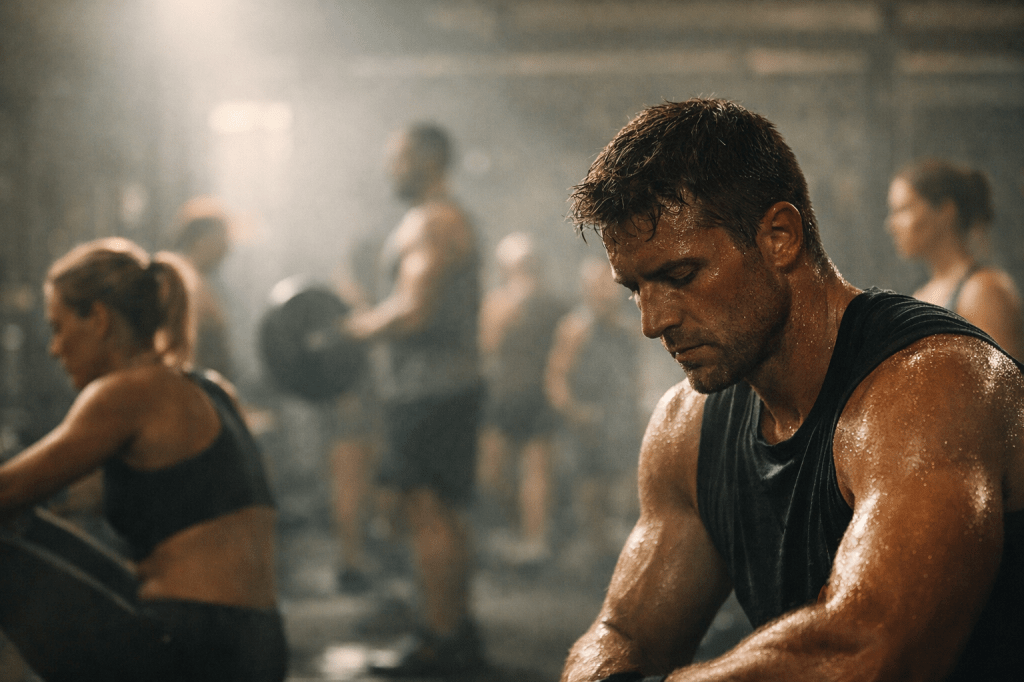




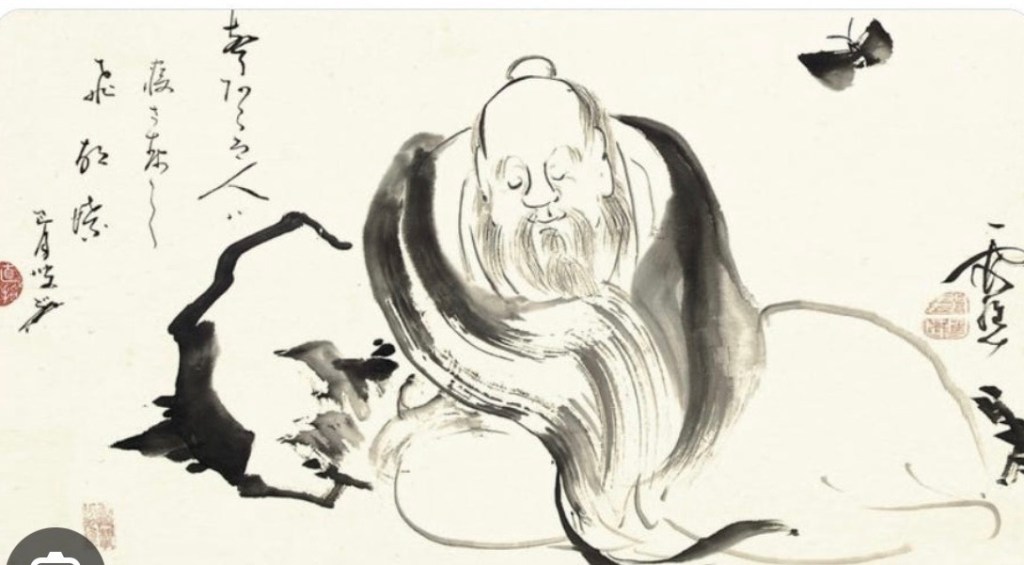
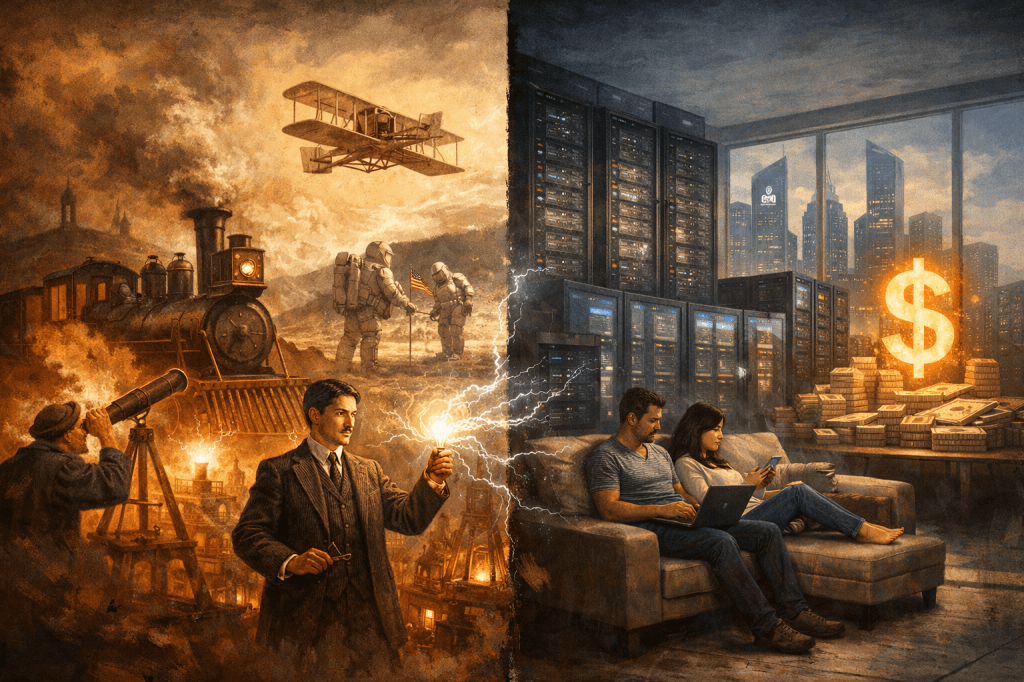
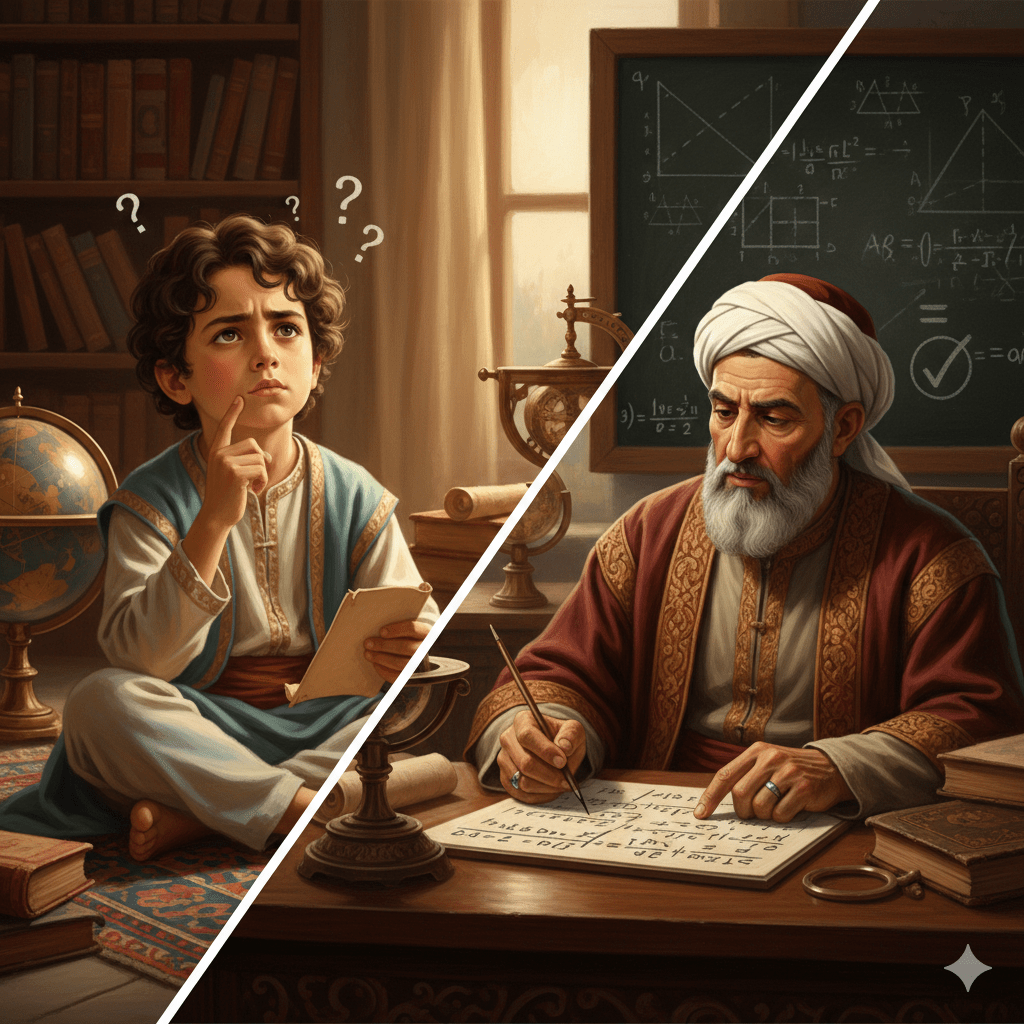
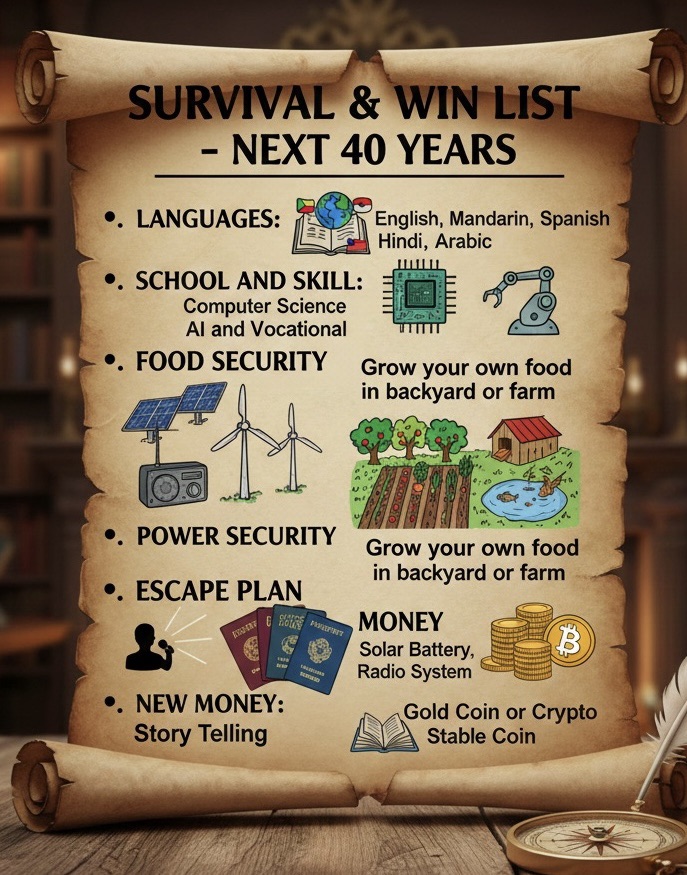

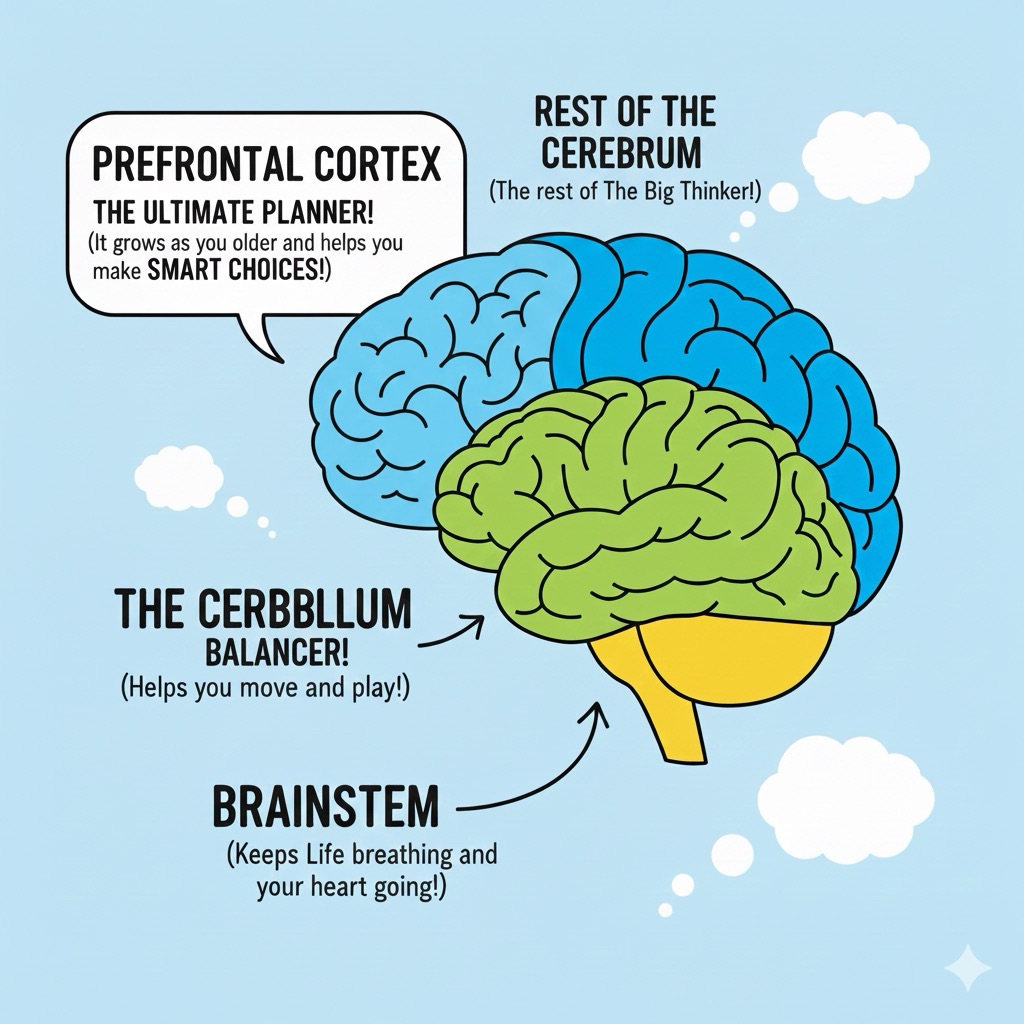
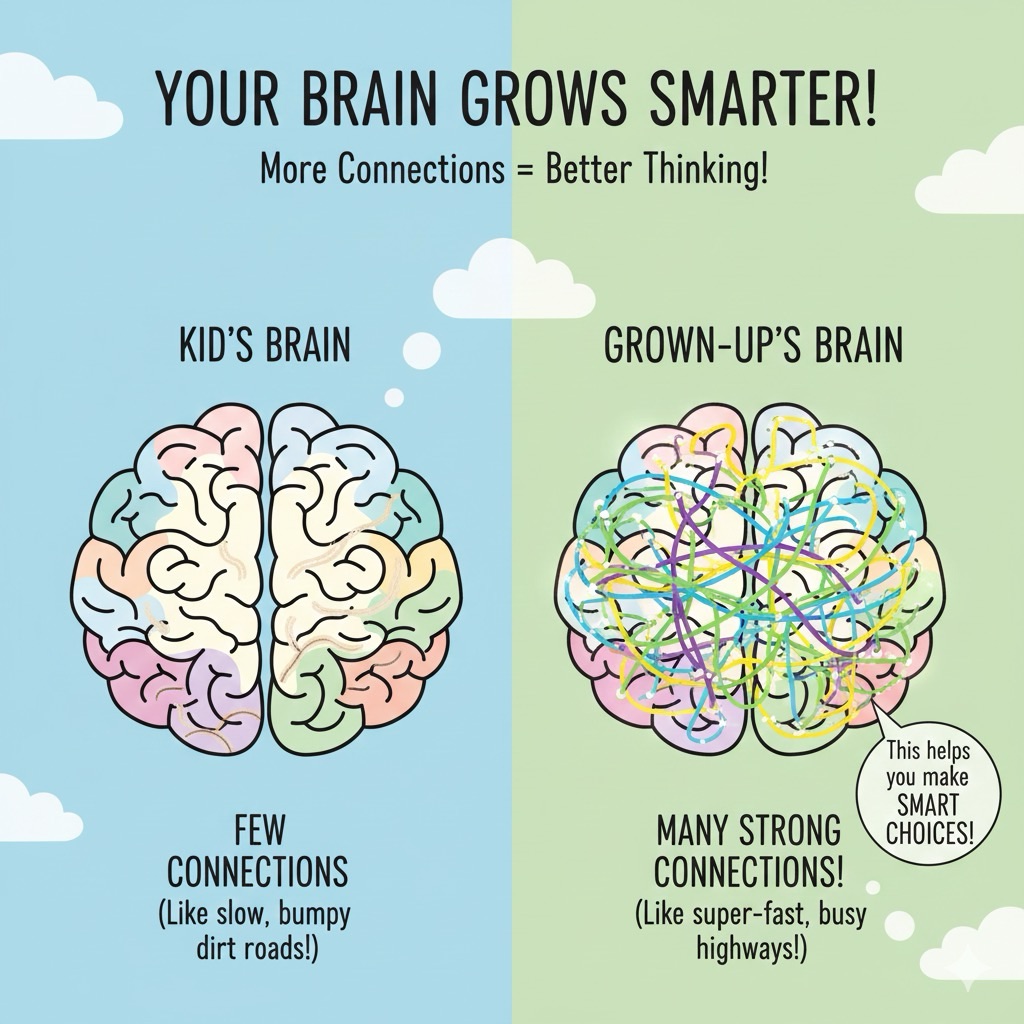

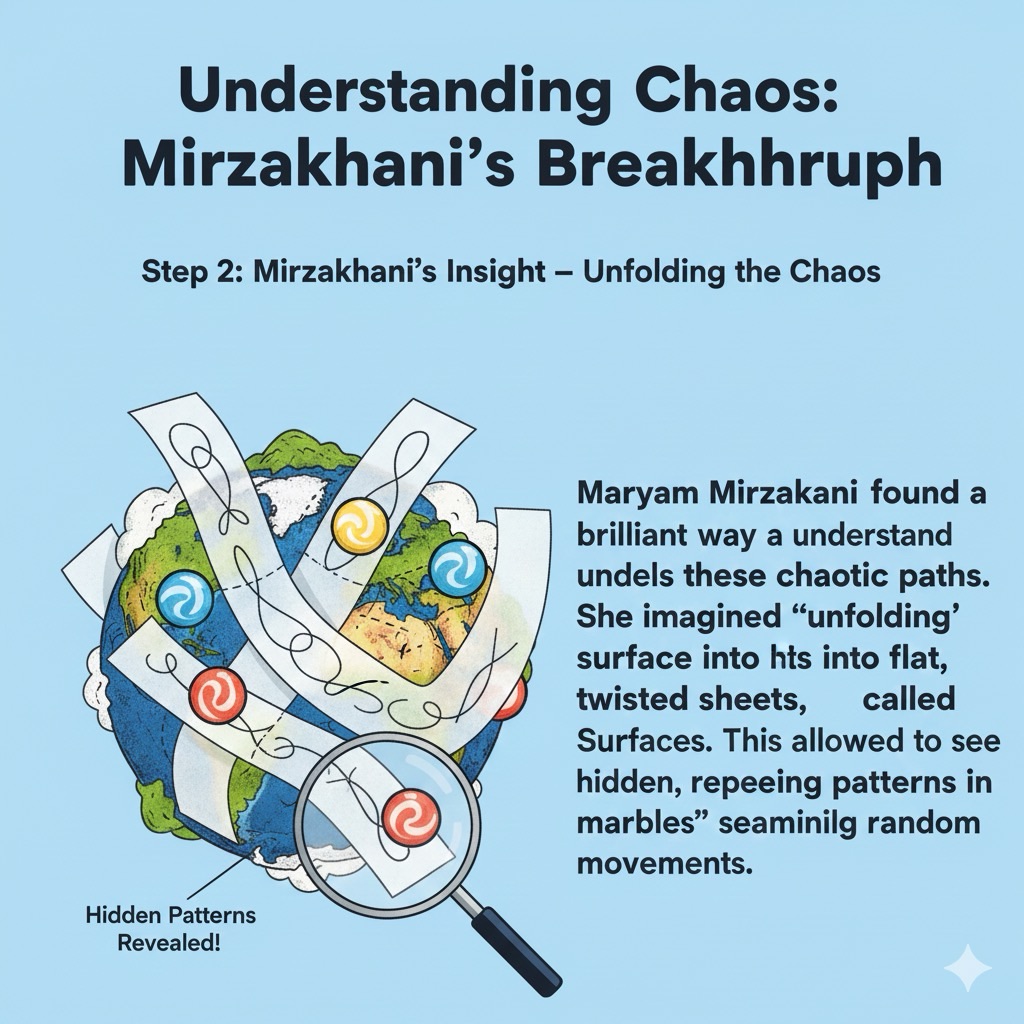
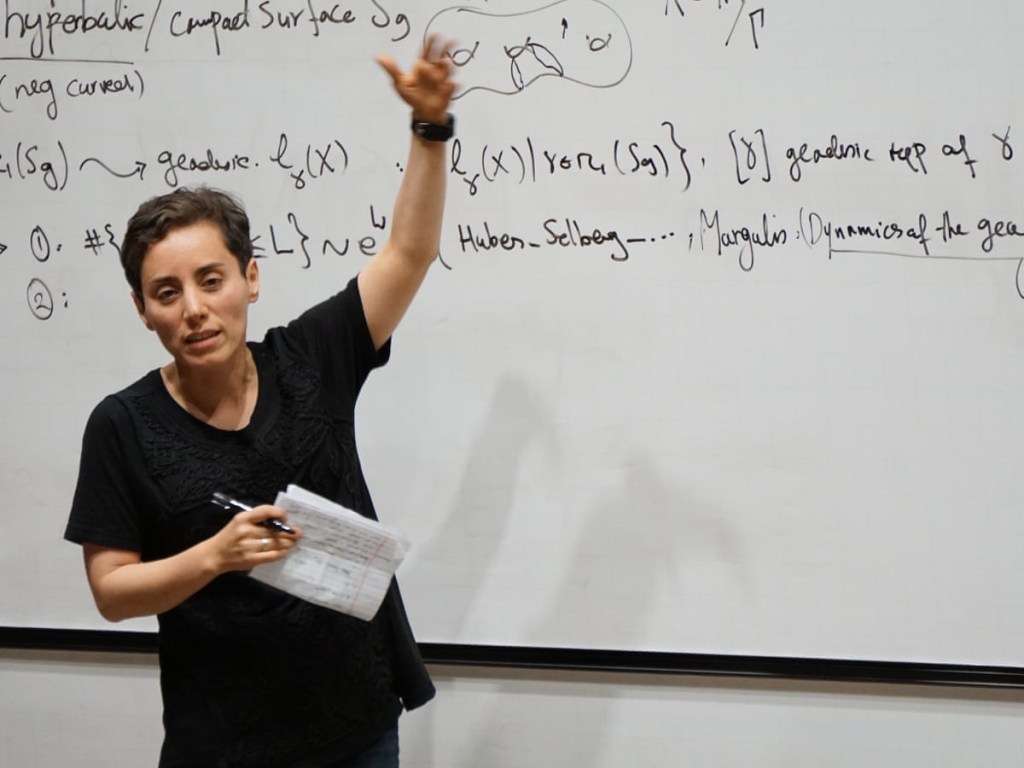
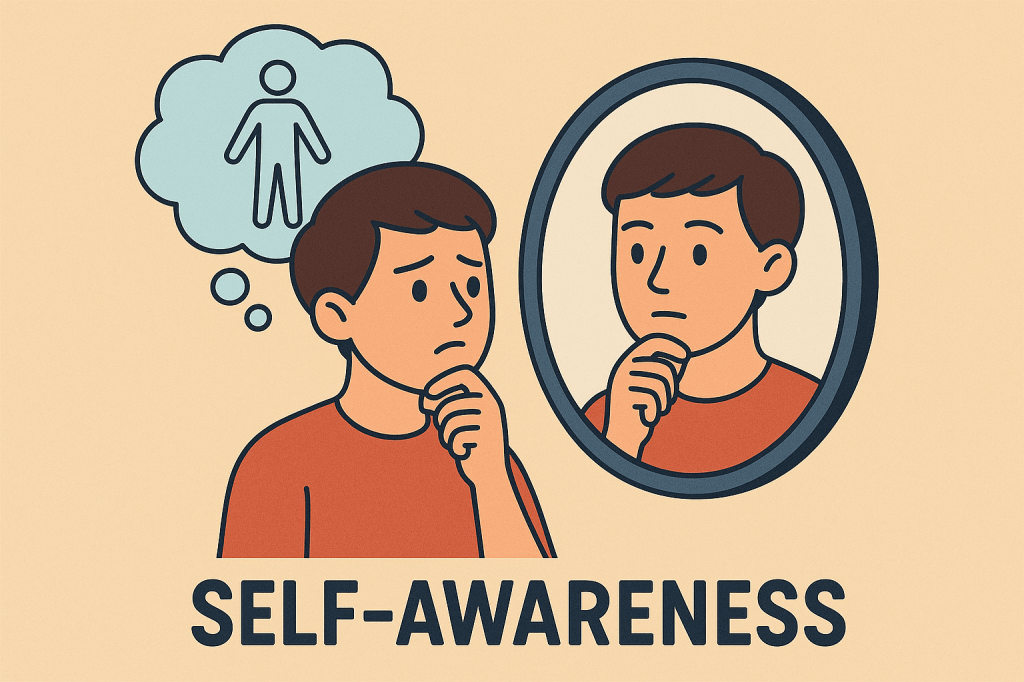








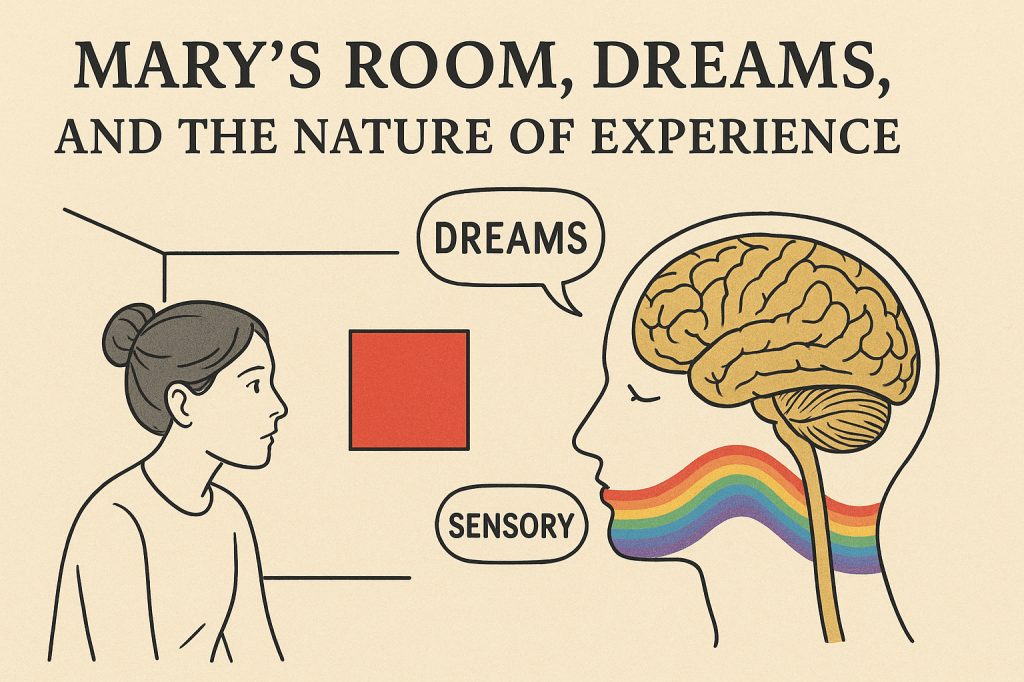
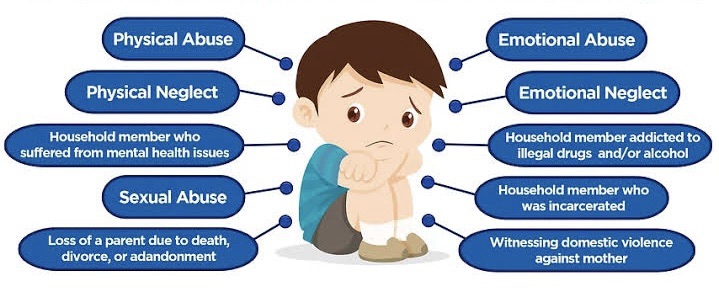



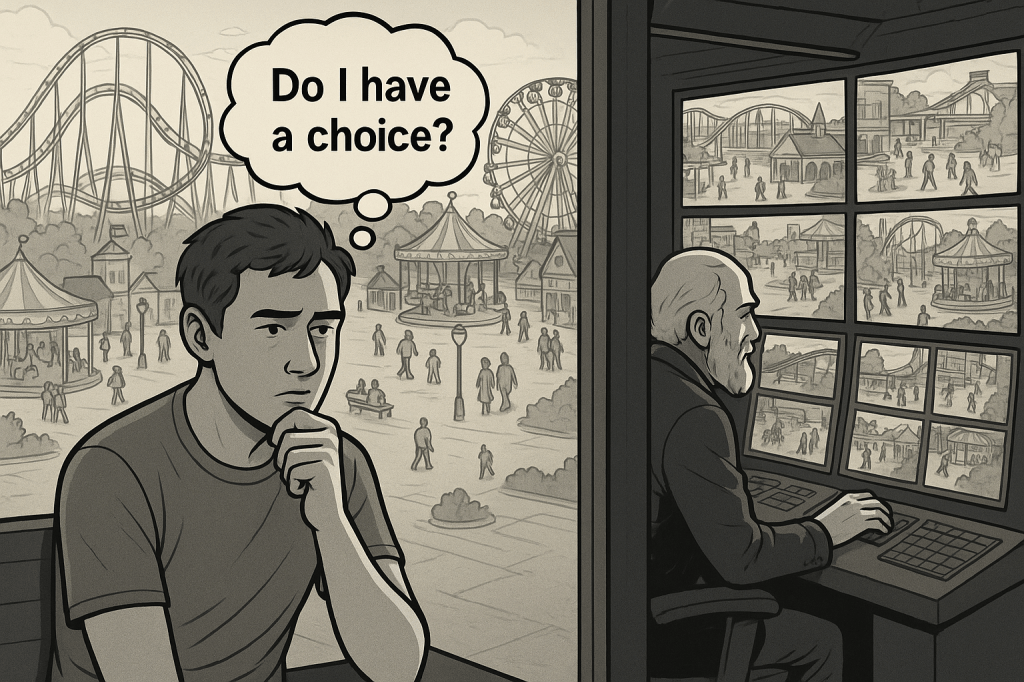


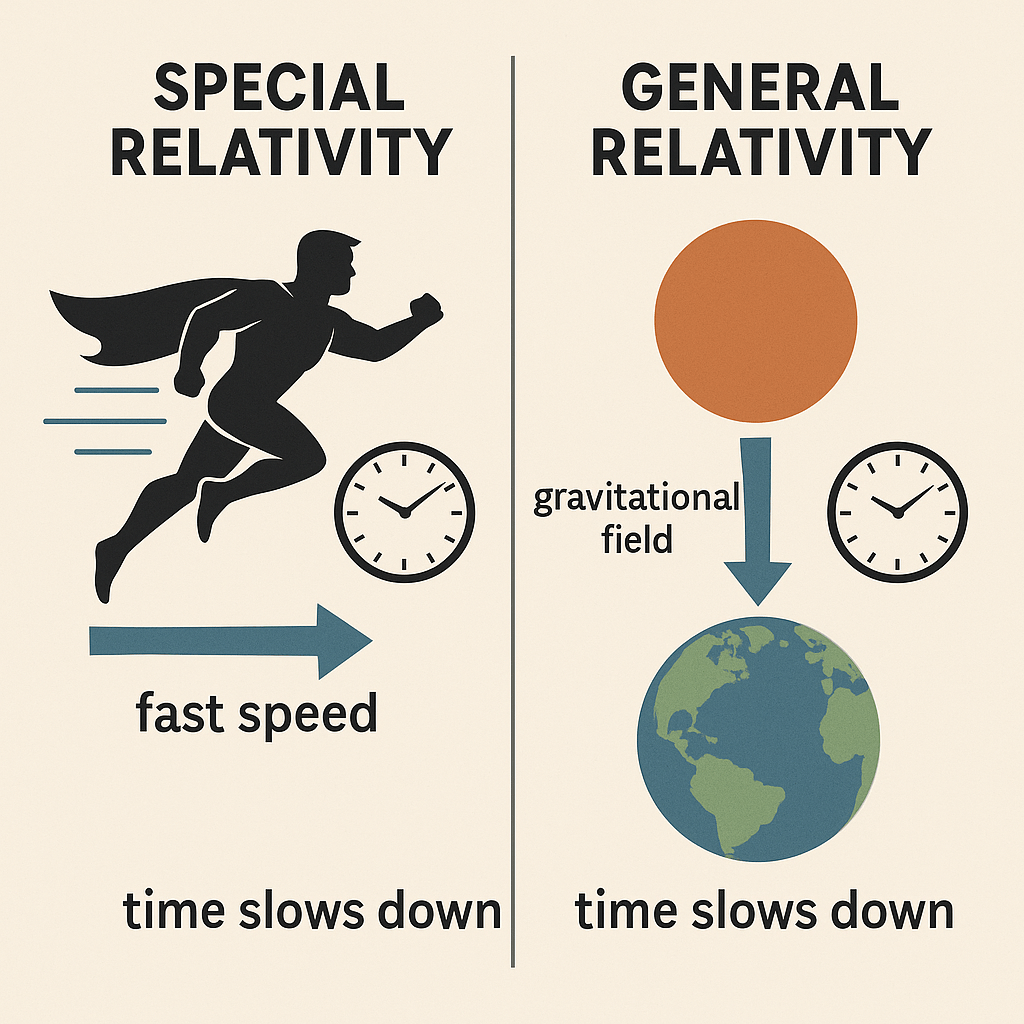


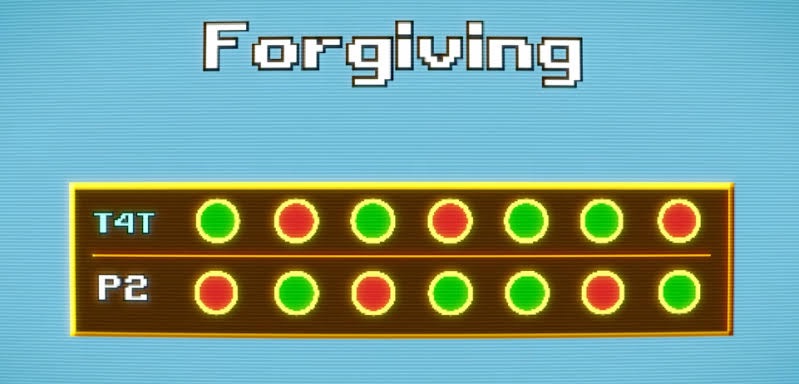

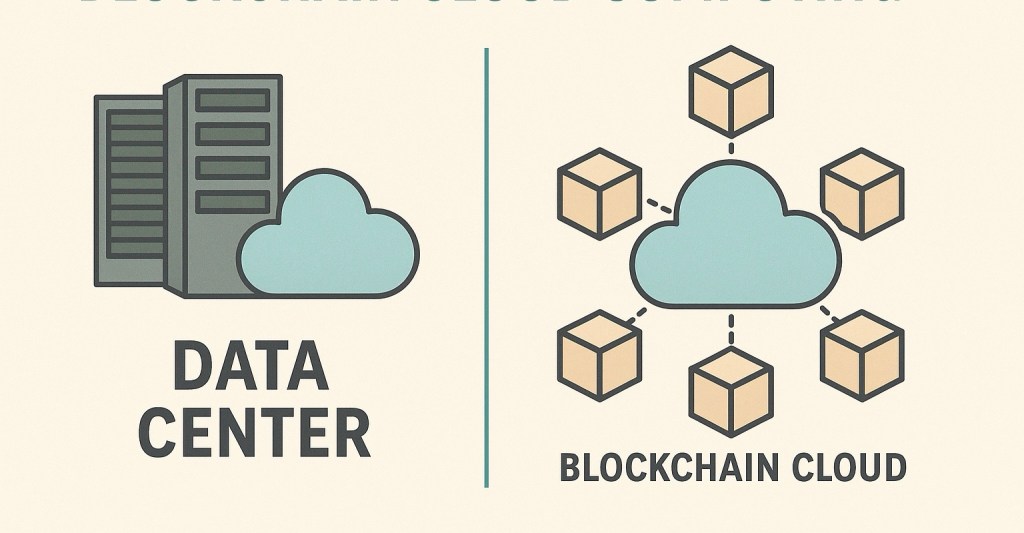
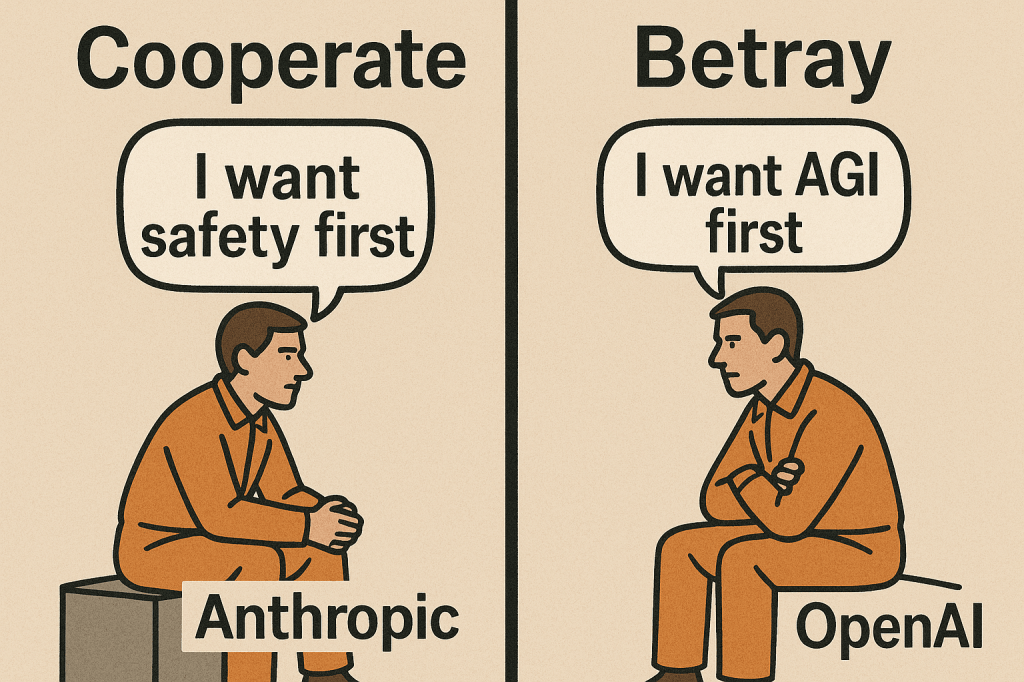
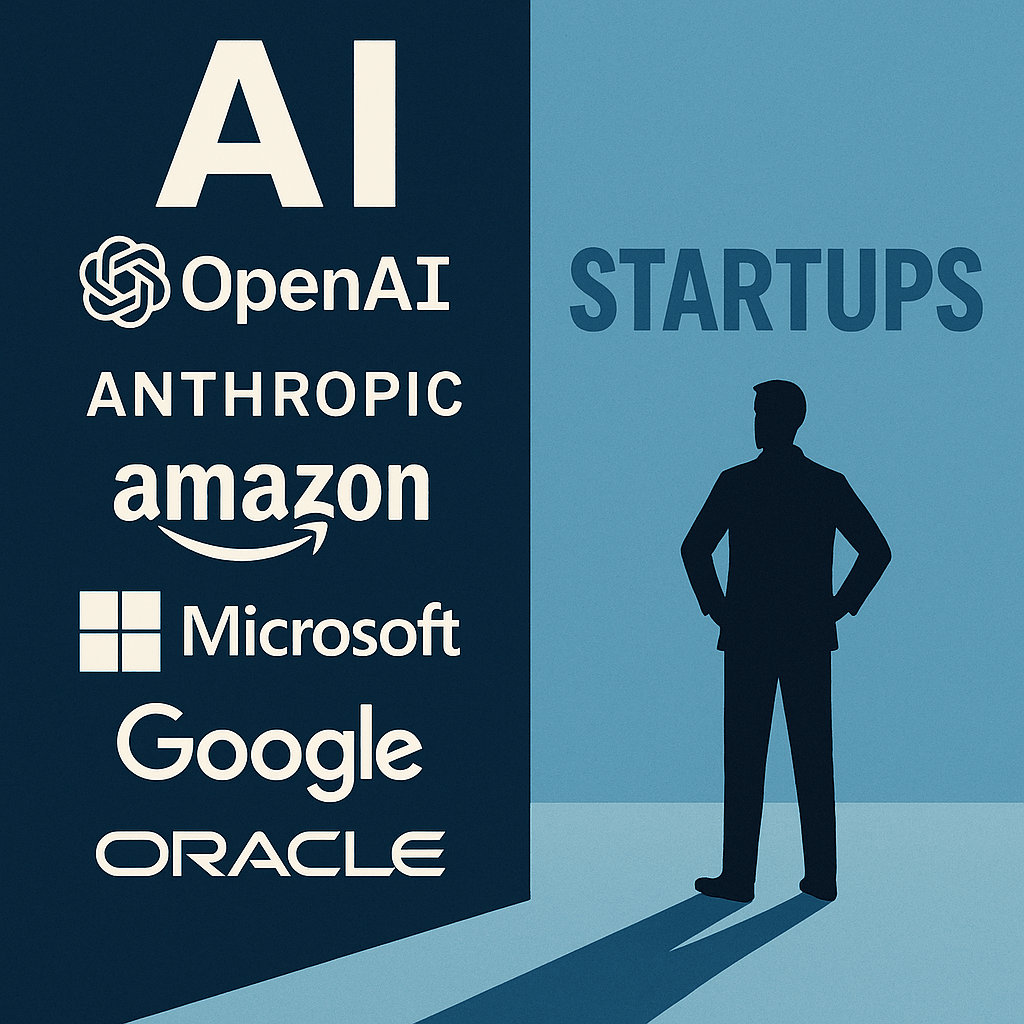






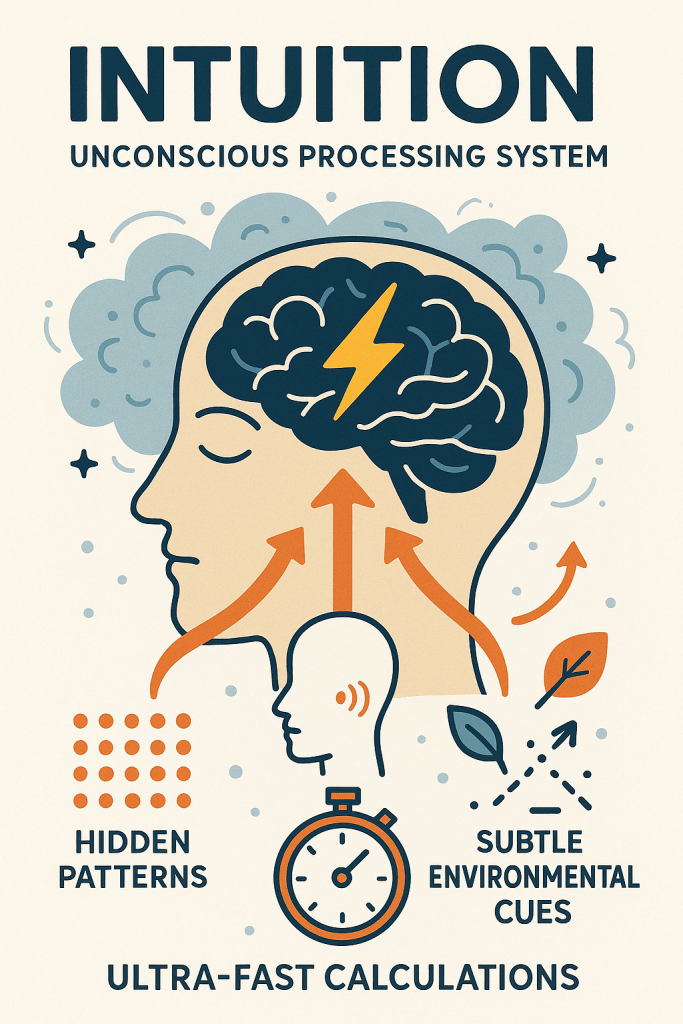

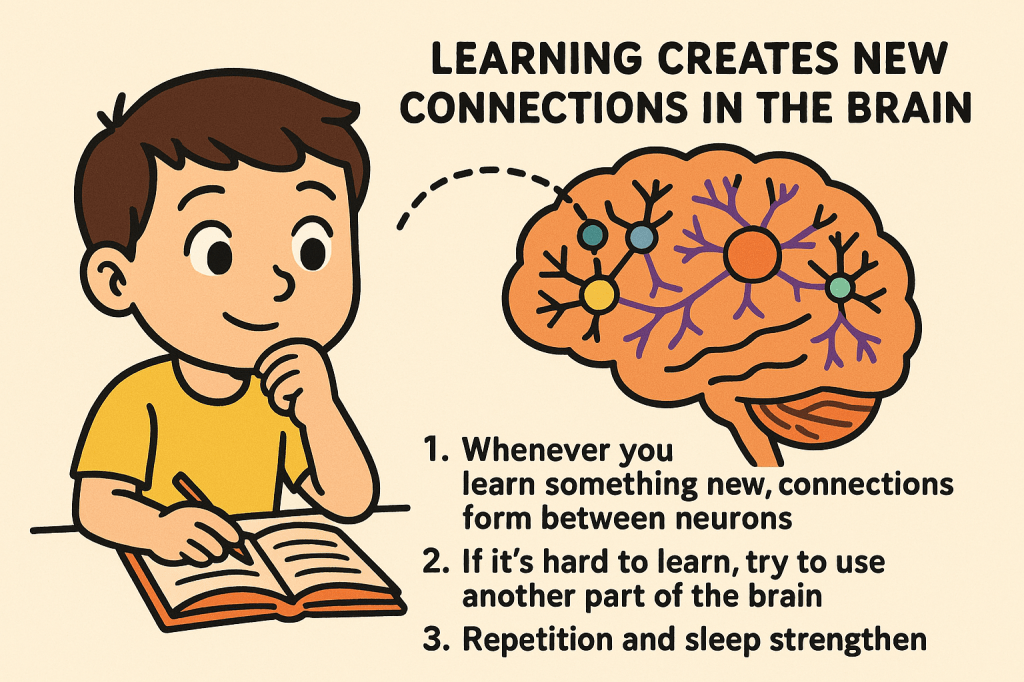


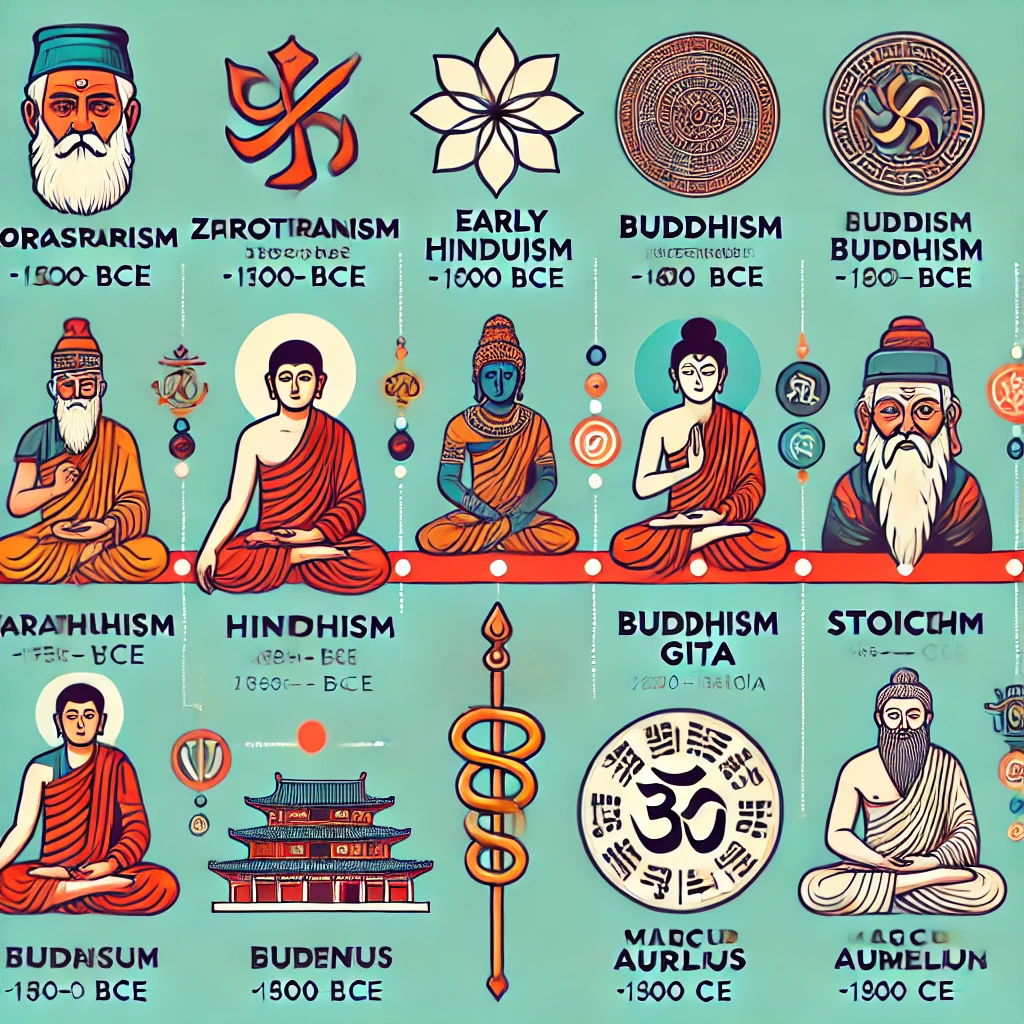


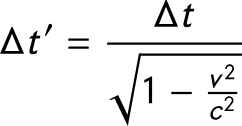
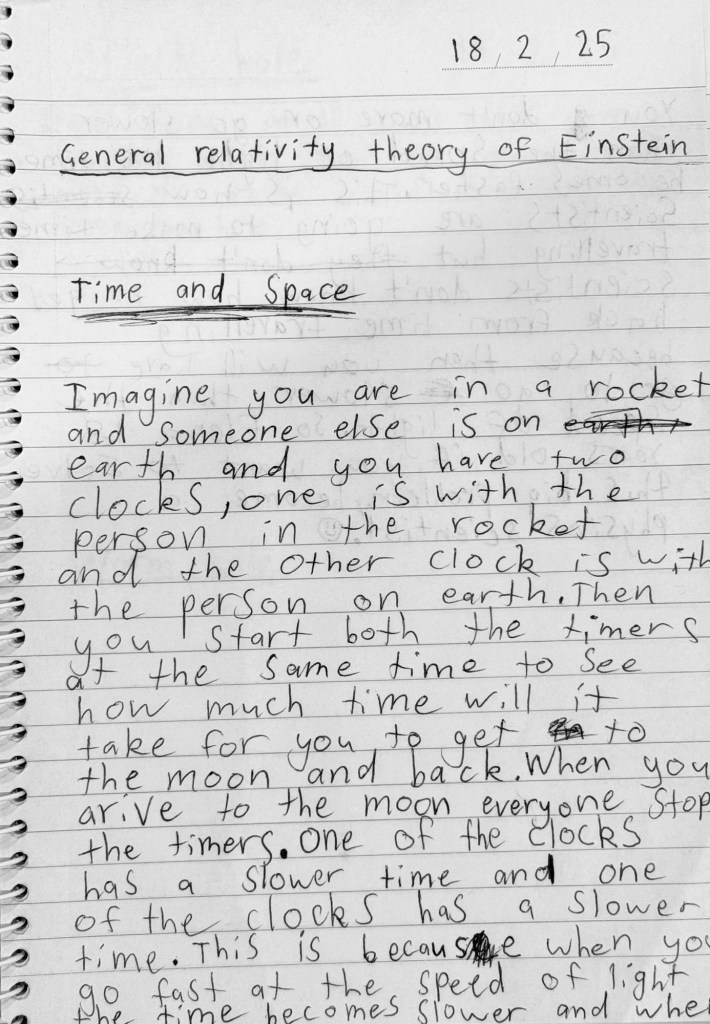
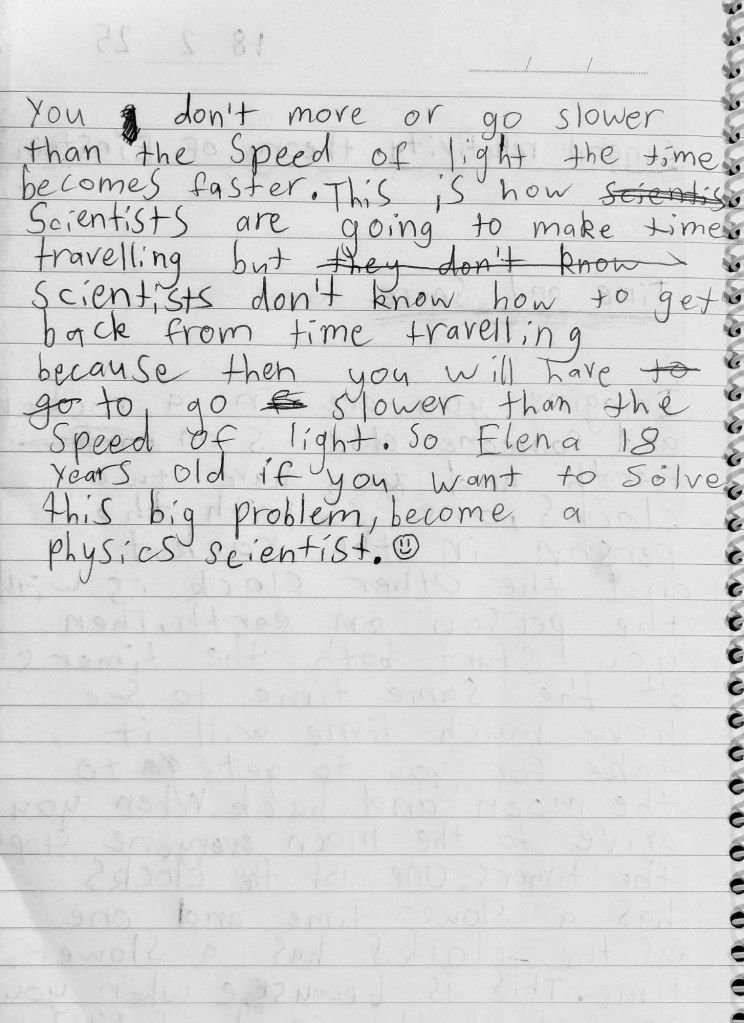

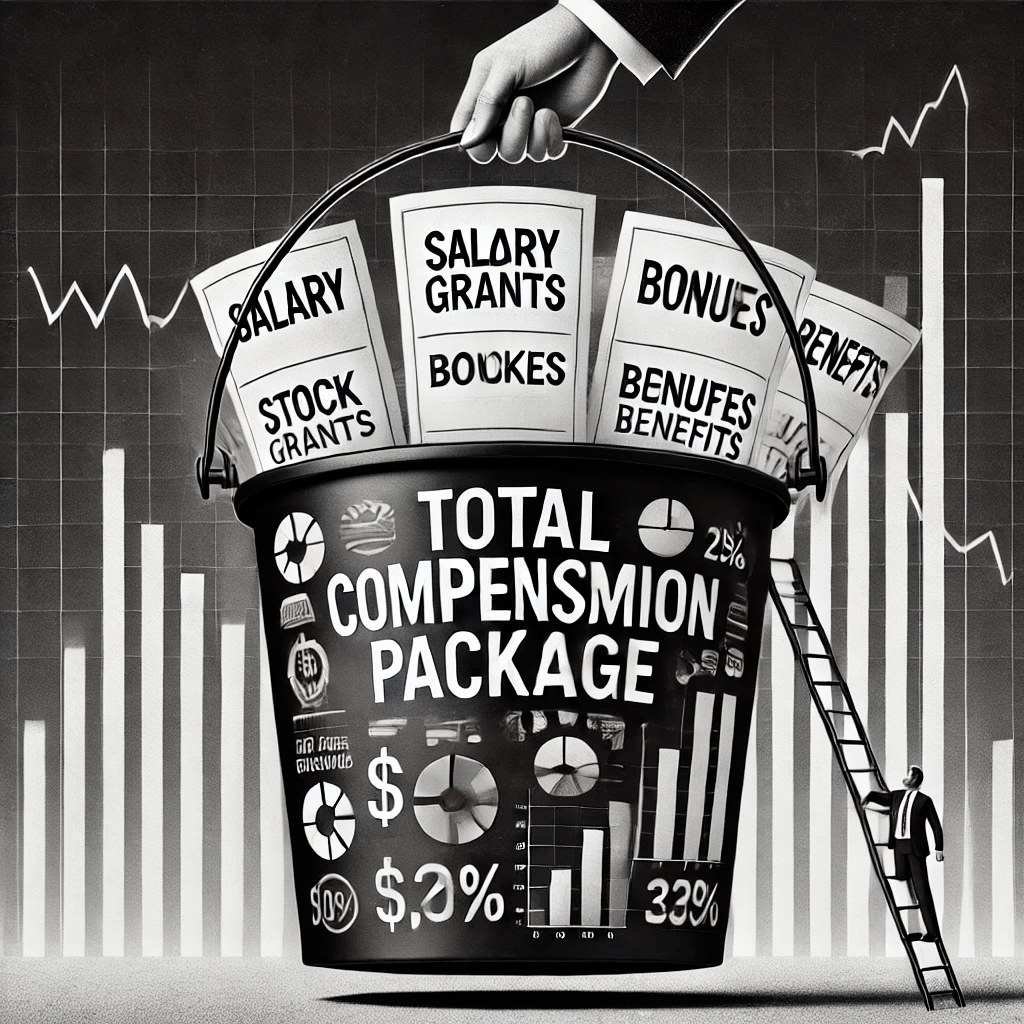


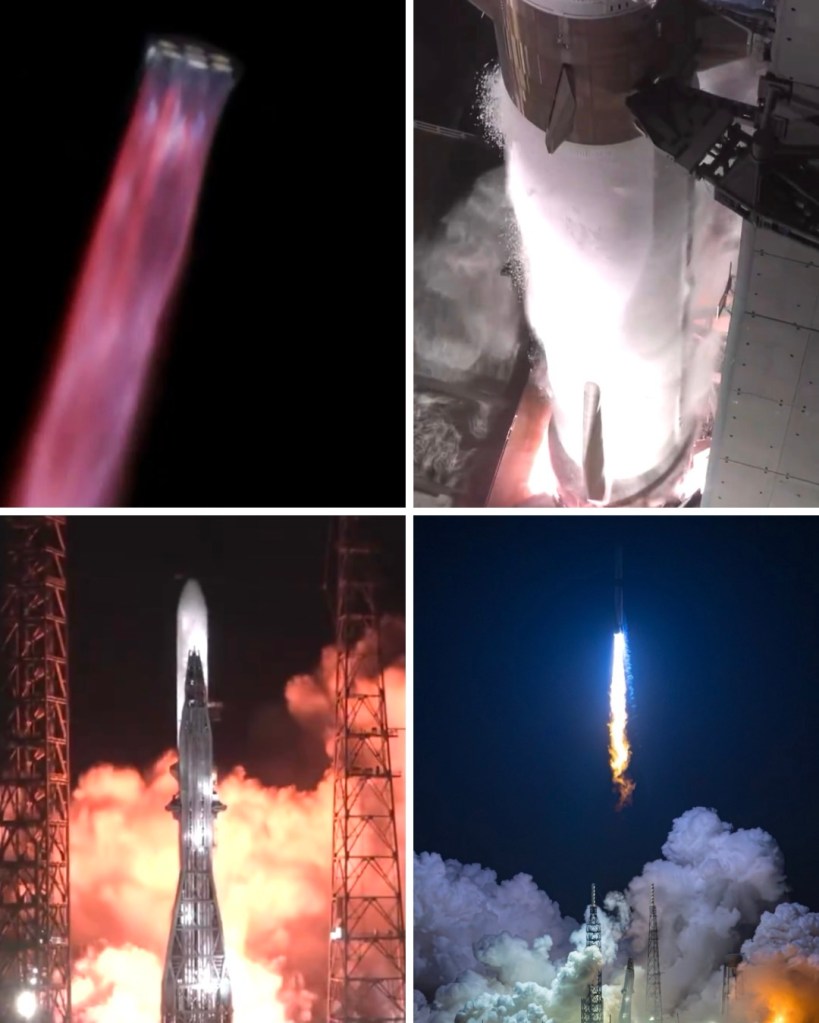


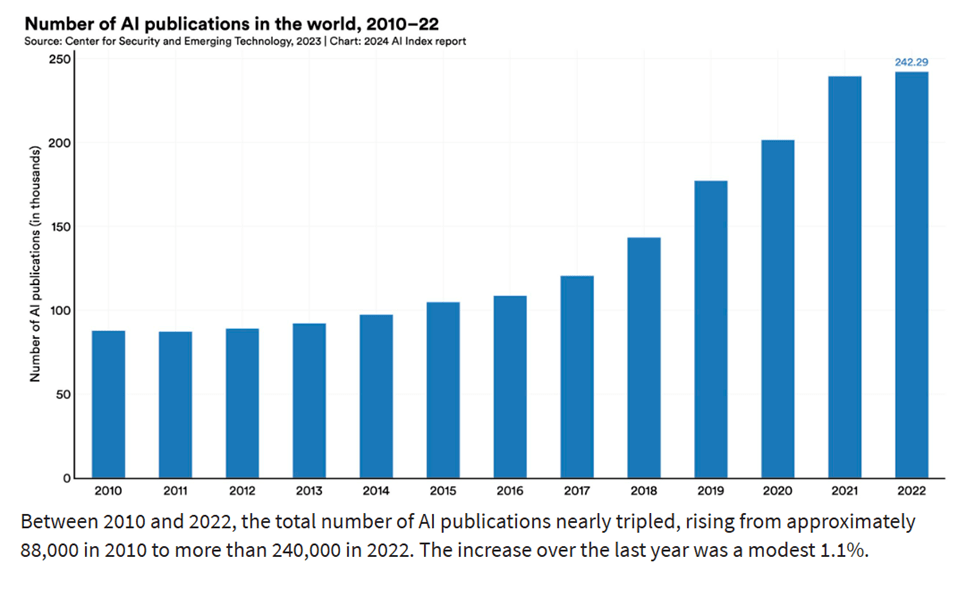

 Mohsin With E